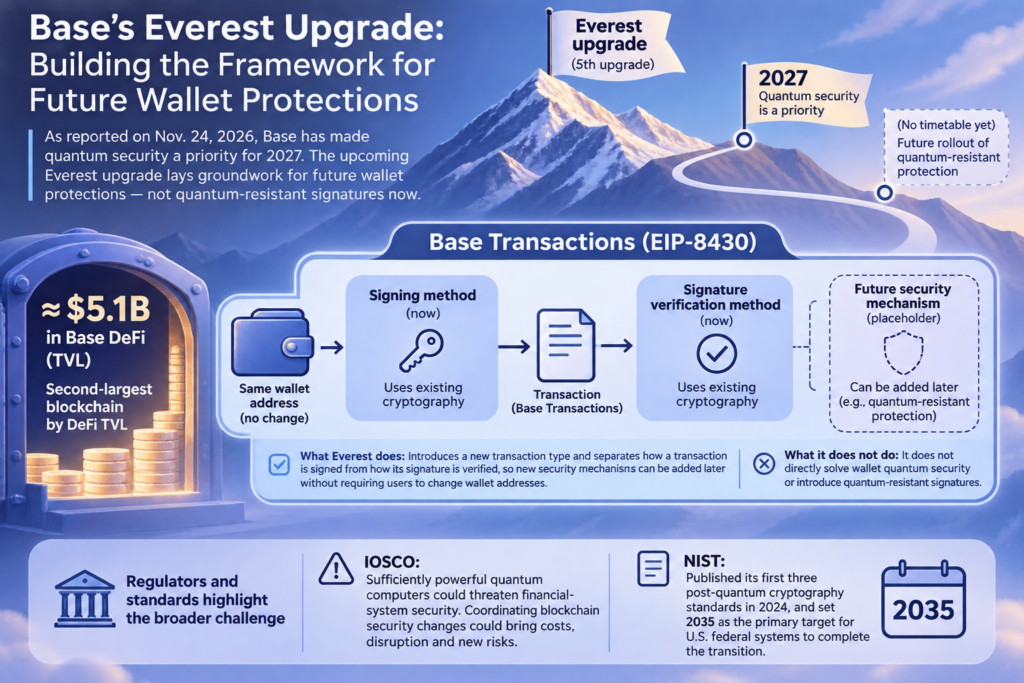
As reported on November 24, 2026, Base had made quantum security a priority for 2027. Its upcoming Everest upgrade is intended to lay groundwork for future wallet protections—not introduce quantum-resistant signatures now.
Base founder Jesse Pollak told Cointelegraph that Everest, the network’s fifth upgrade, will introduce a transaction type called Base Transactions, specified in EIP-8430. It still relies on existing cryptography. By separating how a transaction is signed from how its signature is verified, the format is designed to let Base add new security mechanisms later without requiring users to change wallet addresses.
Pollak said Everest does not directly solve wallet quantum security. Beyond making the work a 2027 priority, Base had not set a timetable for rolling out quantum-resistant protection.
The stakes are substantial: DefiLlama data cited in the report put roughly $5.1 billion in assets deposited across Base DeFi protocols, making it the second-largest blockchain by DeFi total value locked. That figure describes the network’s scale, not its readiness for a quantum threat.
Regulators have also flagged the broader challenge. IOSCO warned that sufficiently powerful quantum computers could threaten financial-system security, while coordinating blockchain security changes could introduce costs, disruption and new risks. NIST published its first three post-quantum cryptography standards in 2024 and set 2035 as the primary target for US federal systems to complete their transition.