
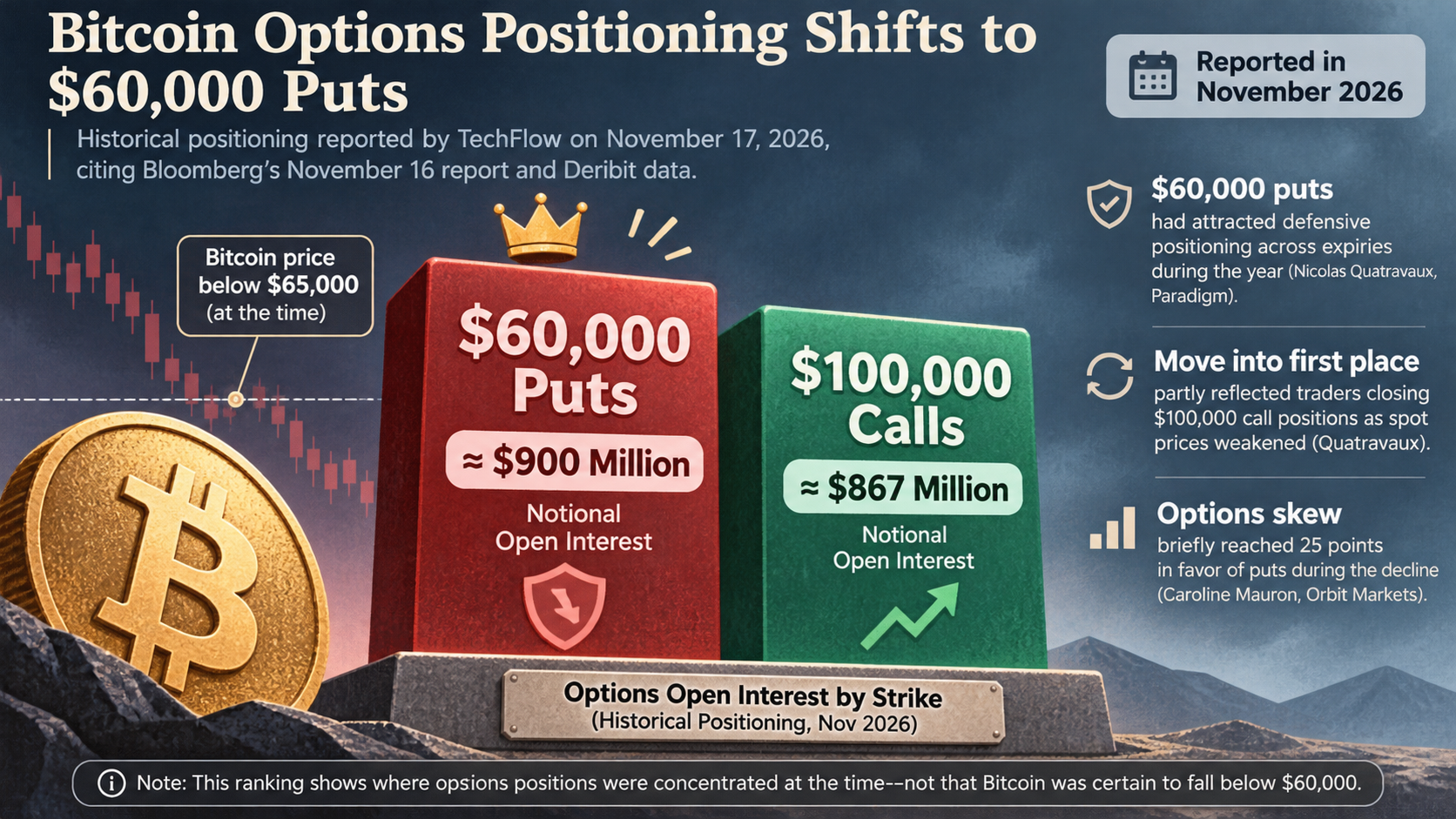
In its November 17, 2026 report, TechFlow described a shift in Bitcoin options positioning as the price fell below $65,000. Citing Bloomberg’s November 16 report and Deribit data, it said put options with a $60,000 strike had about $900 million in notional open interest, overtaking the $100,000 calls, at about $867 million.
That ranking shows where options positions were concentrated—not that Bitcoin was certain to fall below $60,000. Paradigm’s Nicolas Quatravaux said the $60,000 puts had attracted defensive positioning across expiries during the year. He also attributed their move into first place partly to traders closing $100,000 call positions as spot prices weakened. Orbit Markets co-founder Caroline Mauron said options skew had briefly reached 25 points in favor of puts during the decline, indicating stronger demand for downside protection.
What the whale transfers show—and don’t
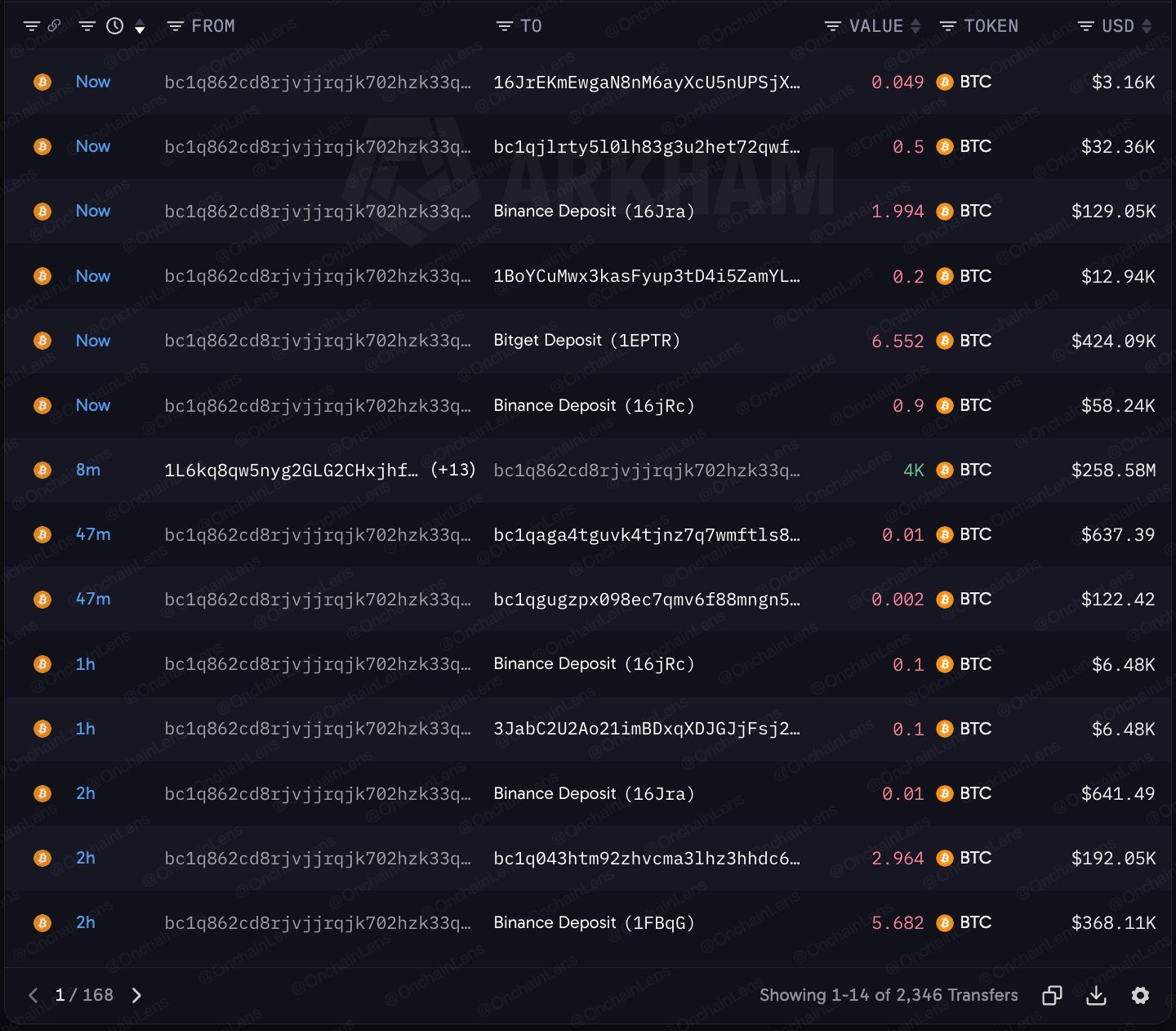
TechFlow cited OnchainLens data showing that an address beginning bc1q862 received 4,000 BTC, valued at roughly $258 million. Over the 24 hours preceding the report, it sent 347 BTC, valued at about $22.4 million, to Binance, Bitget and BIT in batches. Those transfers establish that coins moved to exchanges; they do not, by themselves, confirm sales or identify the wallet’s owner.

With Bitcoin near $64,000 at the time, Mauron described $60,000 as a level that had held twice during the year. She warned that a sustained break could leave little obvious trading-volume support before the $40,000 area. That is her assessment of market risk, not a forecast established by the options or transfer data. TechFlow also reported that Bitcoin had fallen below its 200-day and 200-week moving averages. Bloomberg Intelligence ETF analyst Eric Balchunas said year-to-date spot Bitcoin ETF outflows remained modest relative to the price decline, while weaker technology stocks and broader liquidity were pressuring crypto assets.