A Glassnode and NOWPayments study covered on November 11, 2026 found a sharp gap between stablecoin transfers on-chain and payments received by merchants using NOWPayments. The distinction matters: a large transfer total does not, by itself, show where customers are paying for goods or services.
Where the flows diverge
Across September 2025 to September 2026, USDC on Base accounted for 45.2% of the USDT and USDC value transferred on-chain across the networks studied, but just 0.6% of NOWPayments merchant receipts. USDT on Tron and BNB Chain showed the reverse pattern: together, they represented 14% of on-chain transfer value and 75% of merchant receipts. Add Ethereum USDT, and those three USDT routes accounted for 86% of stablecoin value received by merchants in the gateway’s data.
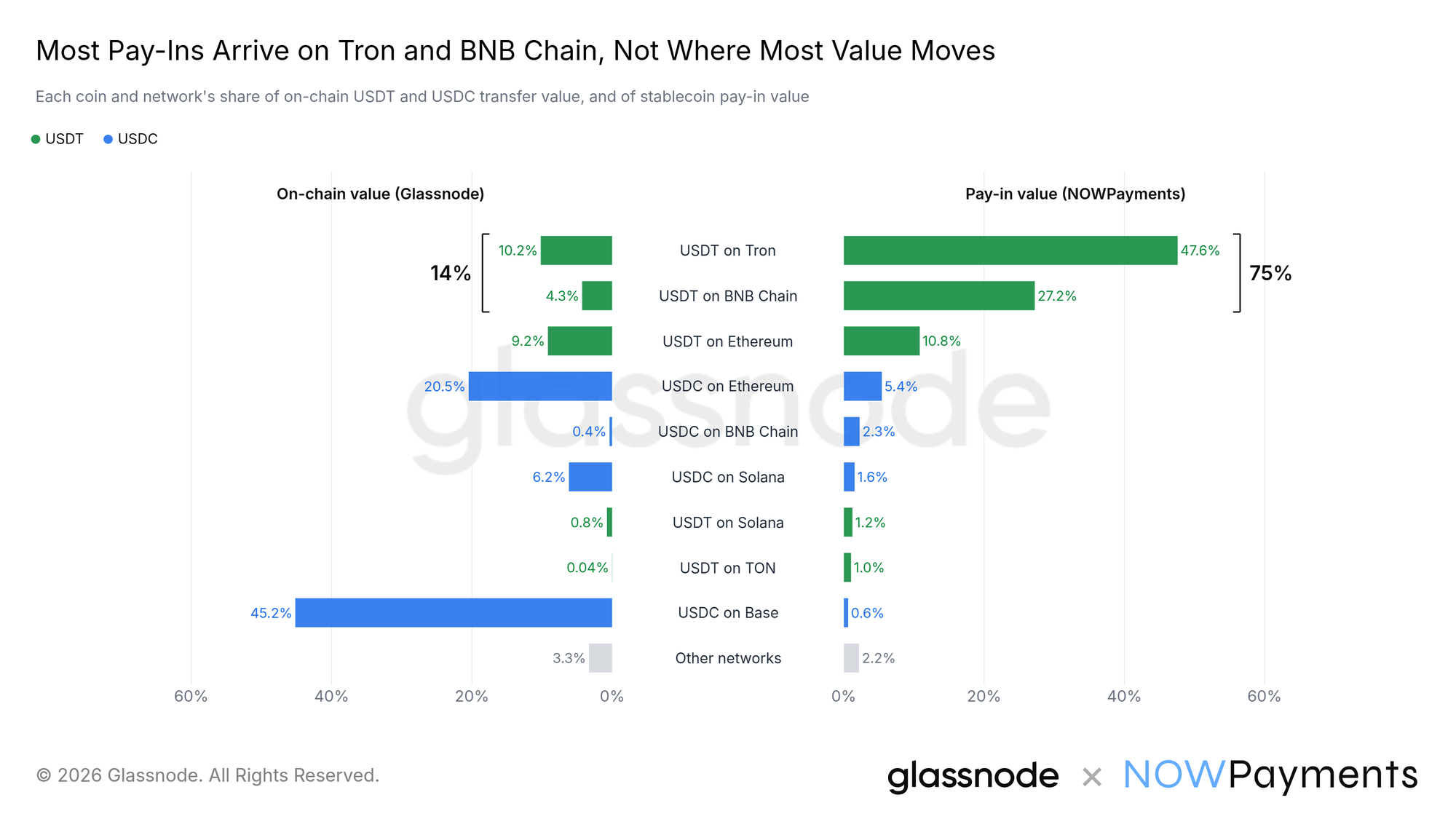
These are figures from NOWPayments’ merchant checkout data, not a measure of every stablecoin payment worldwide. The study also found that the distribution of active on-chain addresses was roughly twice as useful as total transfer value for identifying the routes merchants received payments through.
Payment timing differs, too
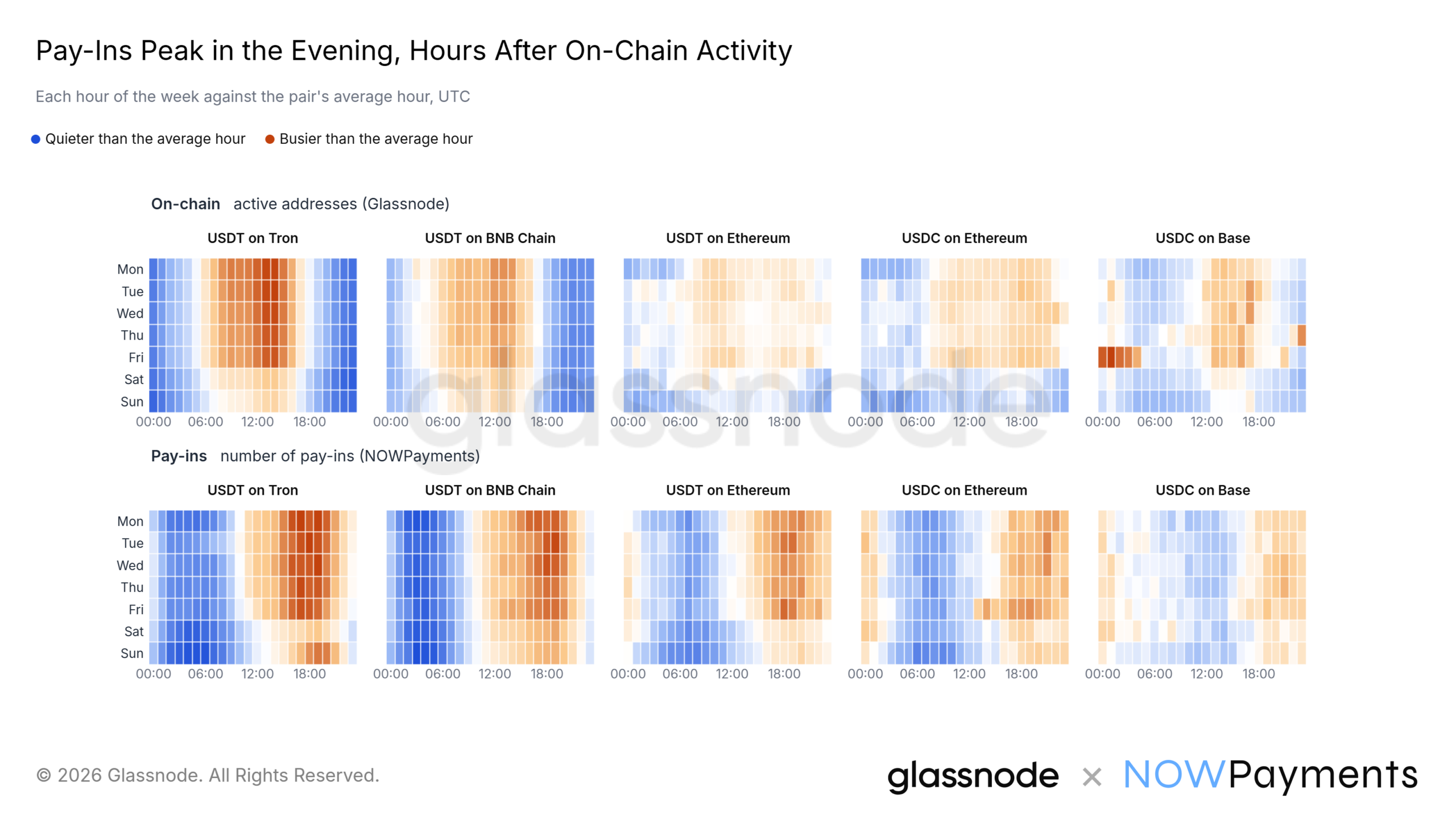
Using hourly data for 39 complete weeks through October 4, 2026, the study found that receipts on major merchant payment routes generally peaked between 19:00 and 21:00 UTC—several hours after the peak in active on-chain addresses.
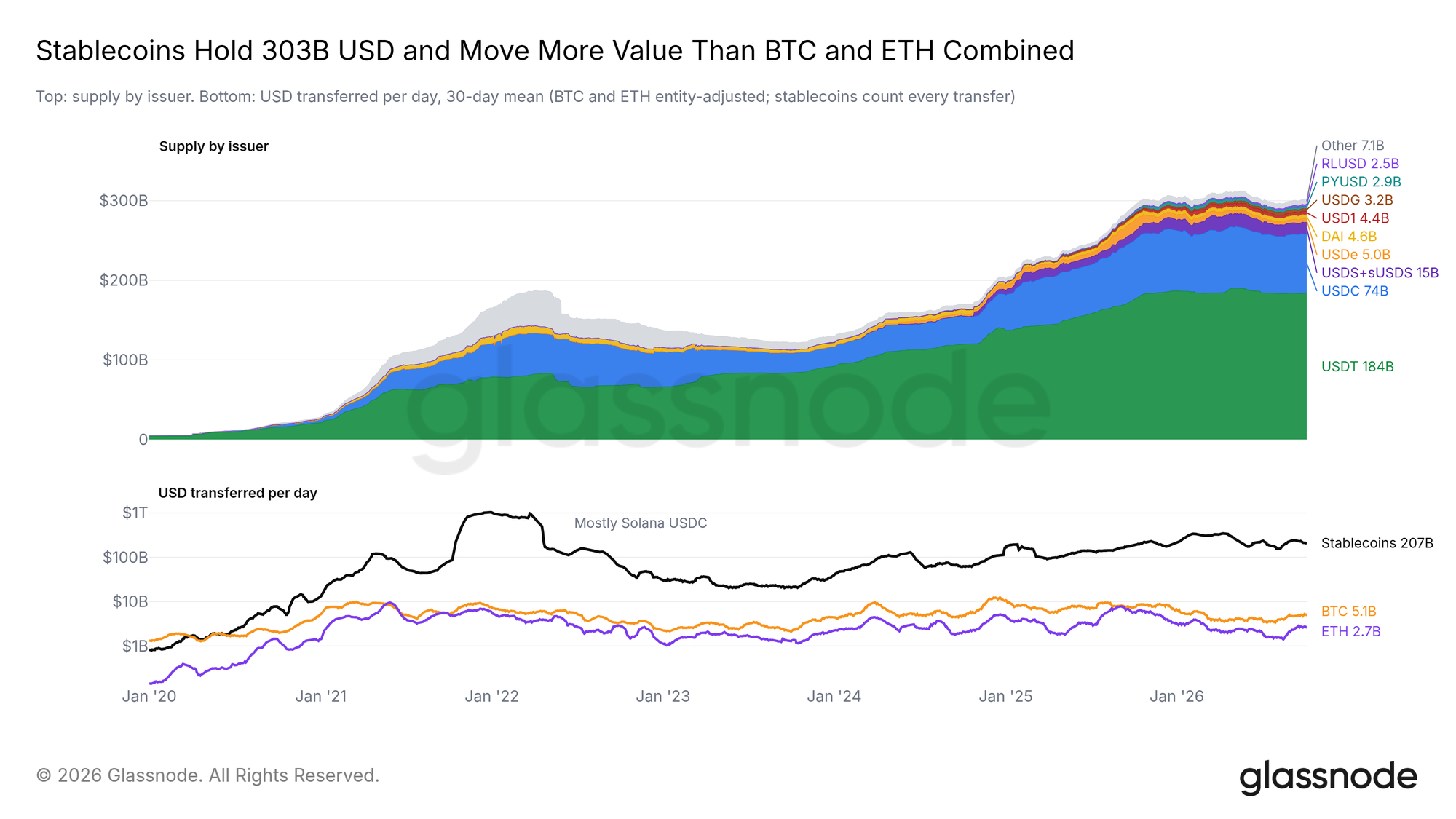
The scale of stablecoins helps explain the attention on payments, but it is a separate measure. As of October 5, 2026, the report put total stablecoin supply at $303 billion, including $184 billion in USDT and $74 billion in USDC. Its 30-day average daily on-chain transfer figures were $207 billion for stablecoins, compared with $5.1 billion for Bitcoin and $2.7 billion for Ethereum. Those transfer figures describe value moving on-chain, not confirmed commercial spending.