Originally reported by PANews on November 11, 2026, at 16:40 (UTC+8). Its central question was whether security concerns are changing how large Bitcoin holders choose to hold their assets.
The security argument
BlackRock digital-assets head Robbie Mitchnick said in an interview cited by PANews that demand to convert directly held Bitcoin into shares of BlackRock’s IBIT ETF had kept growing, largely because holders wanted greater security and peace of mind. He said BlackRock had recorded roughly $3.6 billion in such in-kind conversions since regulators approved the process in 2025. The total could be higher, he cautioned, because BlackRock does not handle or necessarily see every conversion.
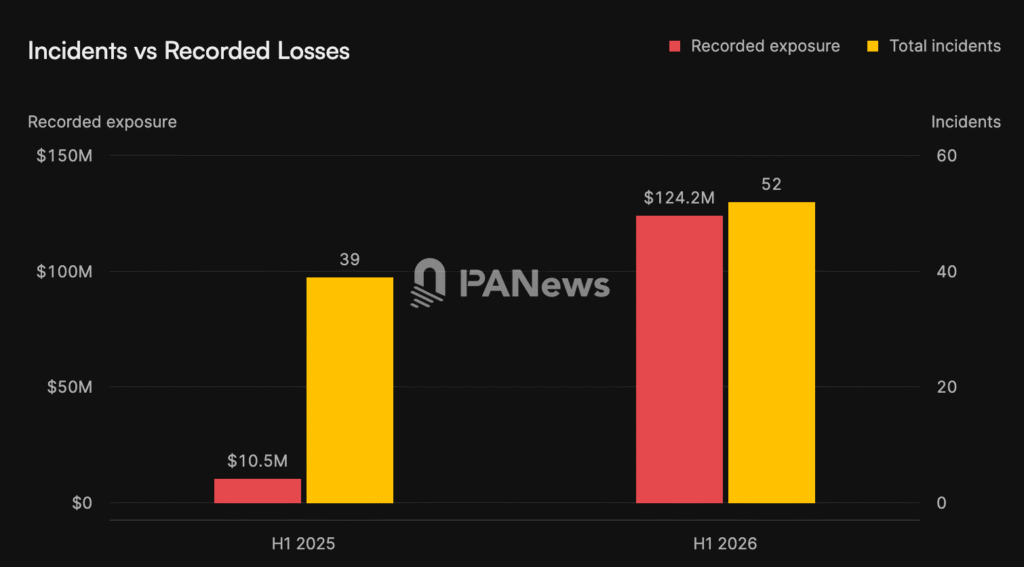
PANews linked that demand to several kinds of risk—not just compromised private keys. Citing CertiK, it reported 52 violent attacks targeting crypto holders worldwide in the first half of 2026, up 33.3% year over year. CertiK put recorded funds exposed in those incidents at about $124.1 million, versus $10.5 million a year earlier; 33 of the incidents were in France. Funds exposed are not necessarily funds stolen.
The article also described reported hardware-wallet security incidents and attacks involving exchanges. Those examples illustrate why some holders question whether managing their own keys, using a hardware wallet or leaving assets on an exchange is necessarily the safer choice. They do not establish that an ETF is risk-free.
What changes when Bitcoin becomes an ETF holding?
An IBIT shareholder holds fund shares rather than Bitcoin they can immediately withdraw or transfer. Mitchnick said the minimum size for an IBIT in-kind conversion had fallen from roughly $30 million to around $1 million–$2 million, though he hoped it could eventually fall to a single share.
Bitwise chief investment officer Matt Hougan argued that ETF custody can add protections for long-term holders, describing cold storage, multiple approvals and restrictions on where assets can be transferred. He also noted a trade-off: ETF shares can trade throughout the day, but holders cannot instantly move the underlying Bitcoin.
That trade-off is the heart of the dispute. Self-custody advocates cited by PANews objected that relying on financial institutions can restore risks of asset controls or freezes while giving up direct control of Bitcoin. Concentration is another concern: Coinbase said it held about 90% of the Bitcoin ETF custody market. OneKey founder Yishi warned about the risk of concentrating custody with one provider; Coinbase, for its part, described cold storage, segregated on-chain assets and other safeguards.
The reported conversions show interest in a different way to hold Bitcoin, not proof that institutional custody has solved every security problem. The choice shifts which risks a holder takes on—and who controls the assets.
Source: panewslab.com (originally published 2026-11-11 16:40 UTC+8)