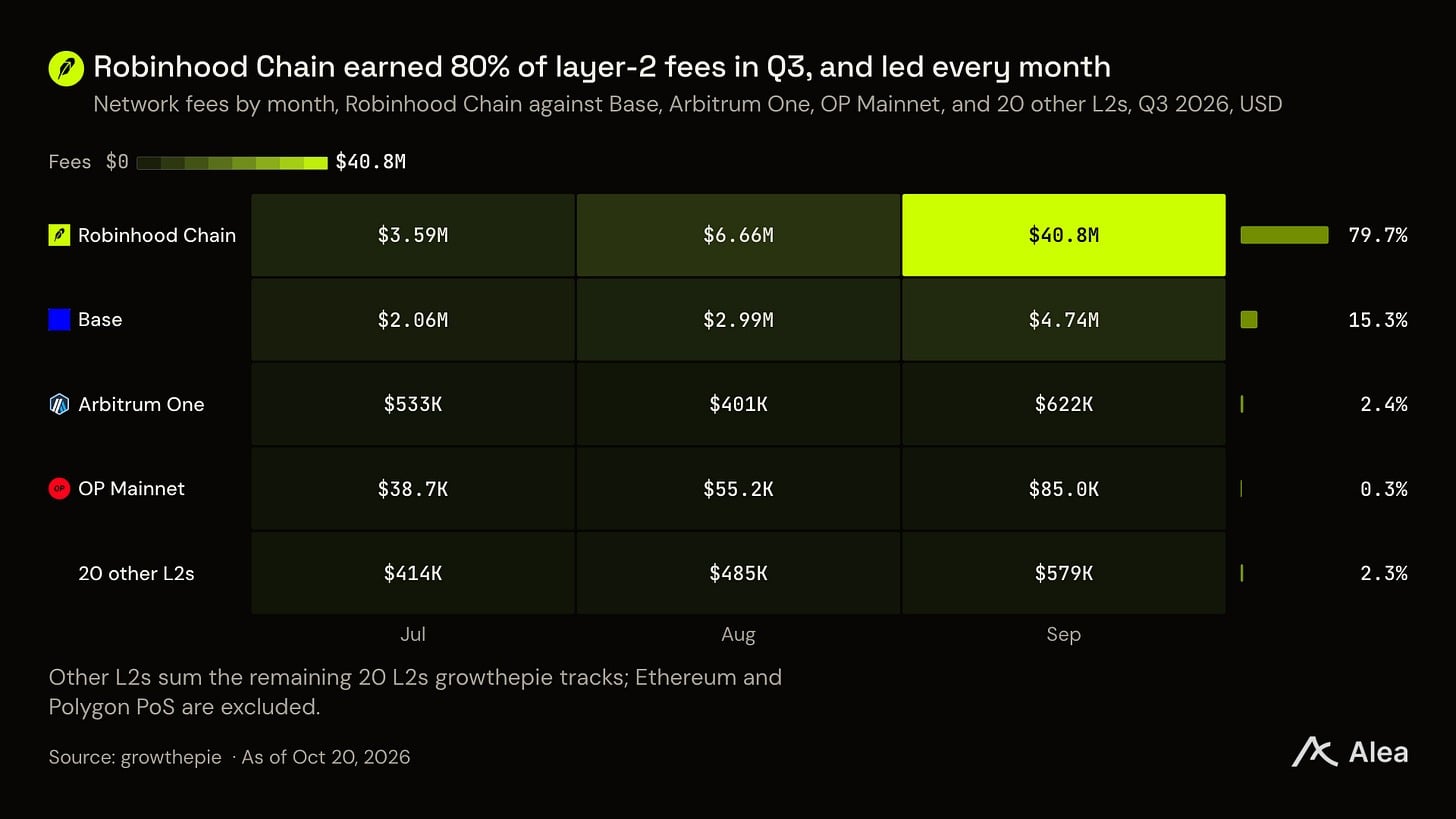
In an analysis published on November 11, 2026, Alea Research reported that Robinhood Chain collected about 80% of Ethereum Layer 2 network fees in the third quarter of 2026, its first full quarter after mainnet launch. Its onchain exchange volume reached $90.7 billion, compared with a combined $50 billion in crypto trading volume through the Robinhood app and Bitstamp.
Those figures put the chain in the spotlight, but the fee total needs context: a short-lived token-launch surge generated most of it.
What drove the fees?
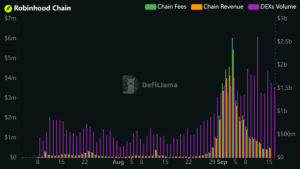
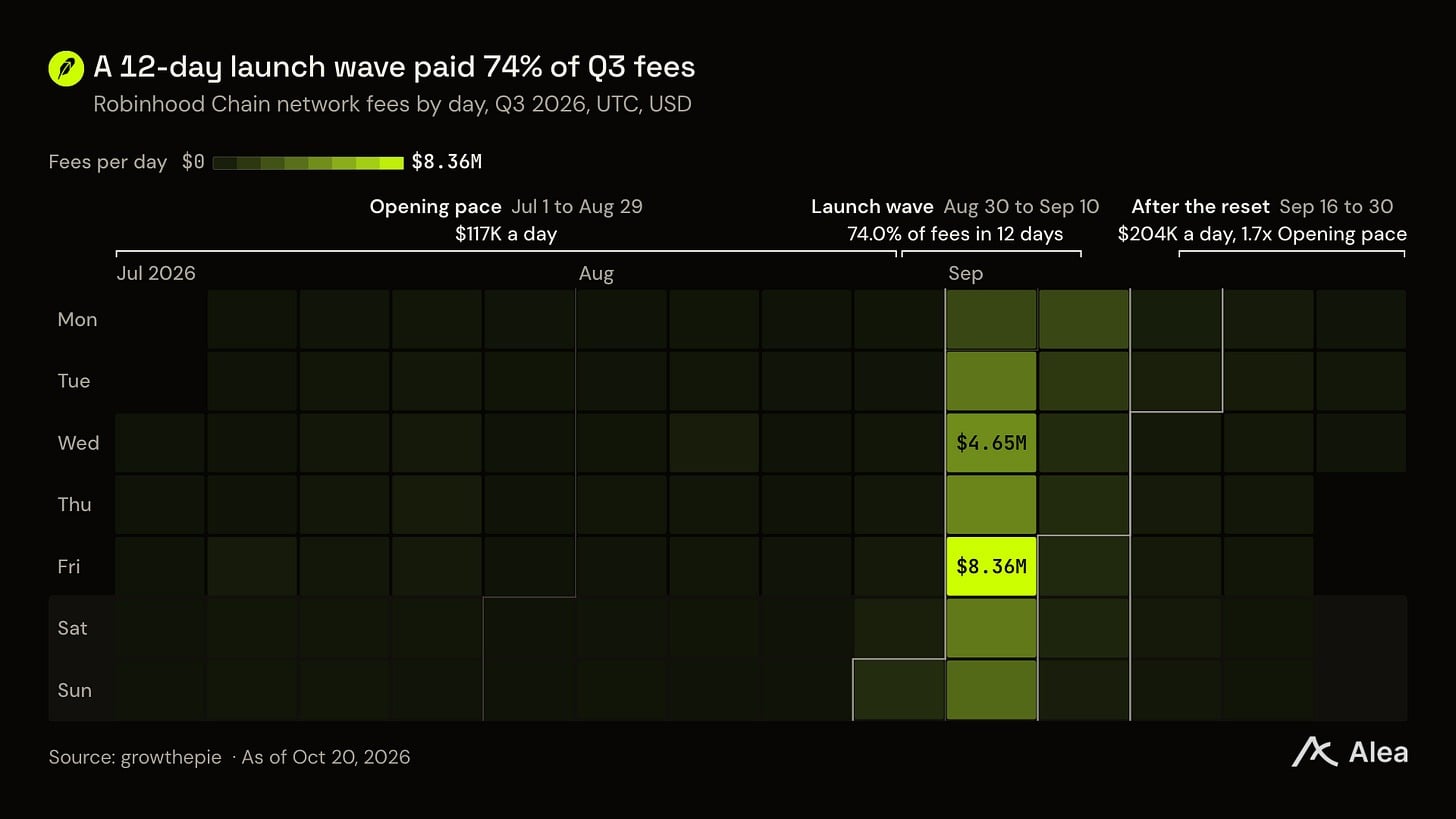
Alea Research put Robinhood Chain’s Q3 network fees at $51 million. A 12-day wave of token launches from August 30 to September 10 accounted for 74% of that total. The surge followed the August 4 release of Pons V2’s token factory; the research counted 648,701 launches through it.
Even excluding those 12 days, the chain accounted for 57.7% of Layer 2 network fees over the quarter’s other 80 days, versus 30.7% for Base. But fees cooled after the launch wave. They averaged $121,000 a day in September’s final week and $54,600 a day from October 1 to 19.
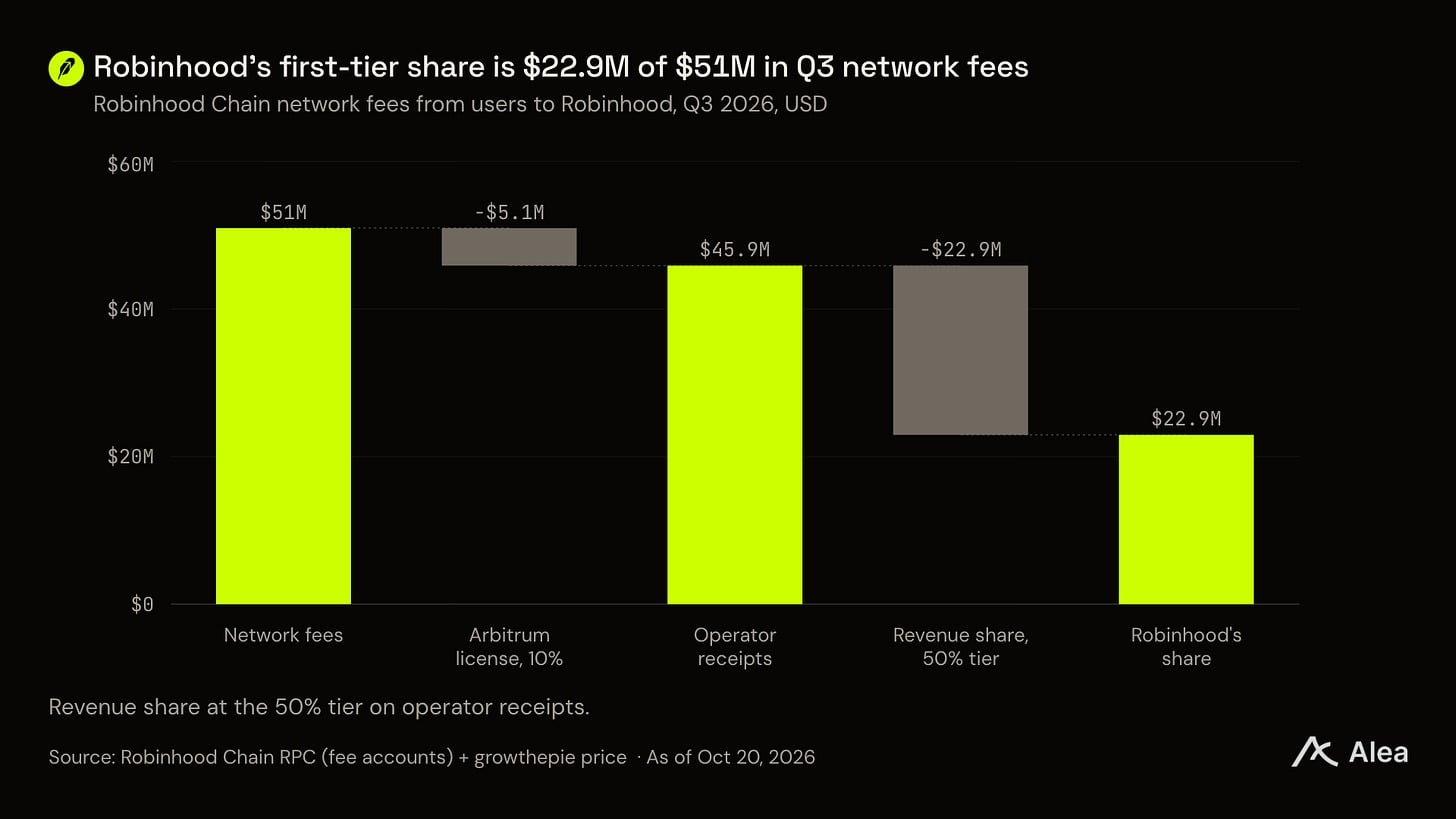
Robinhood does not keep every dollar of network fees. Under the arrangement described by Alea Research, Arbitrum receives a 10% technology licensing fee, while Robinhood initially retains 50% of the remainder. On that basis, the research estimated Robinhood’s Q3 share at $22.9 million.
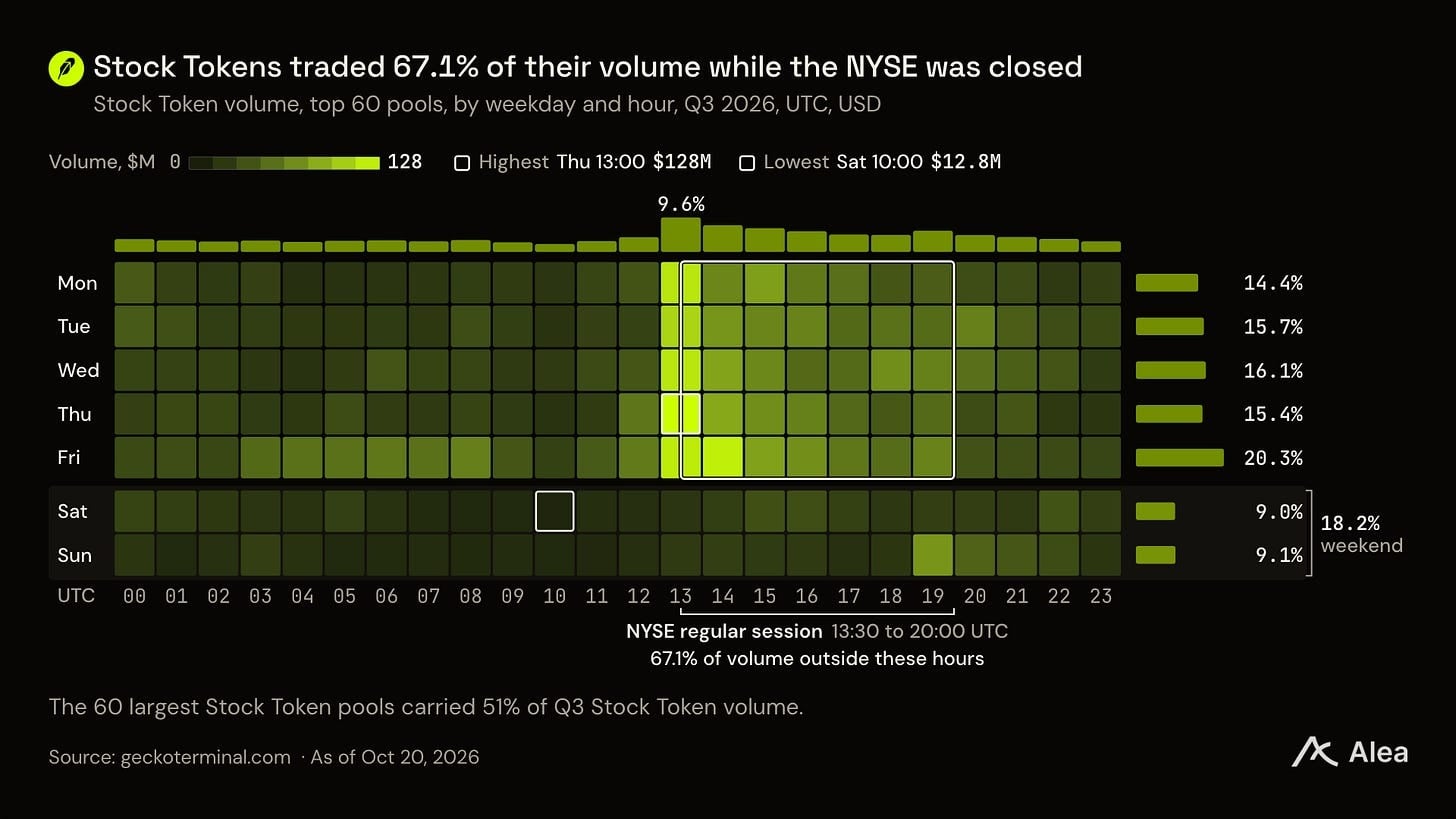
Stock tokens gained a trading role outside market hours
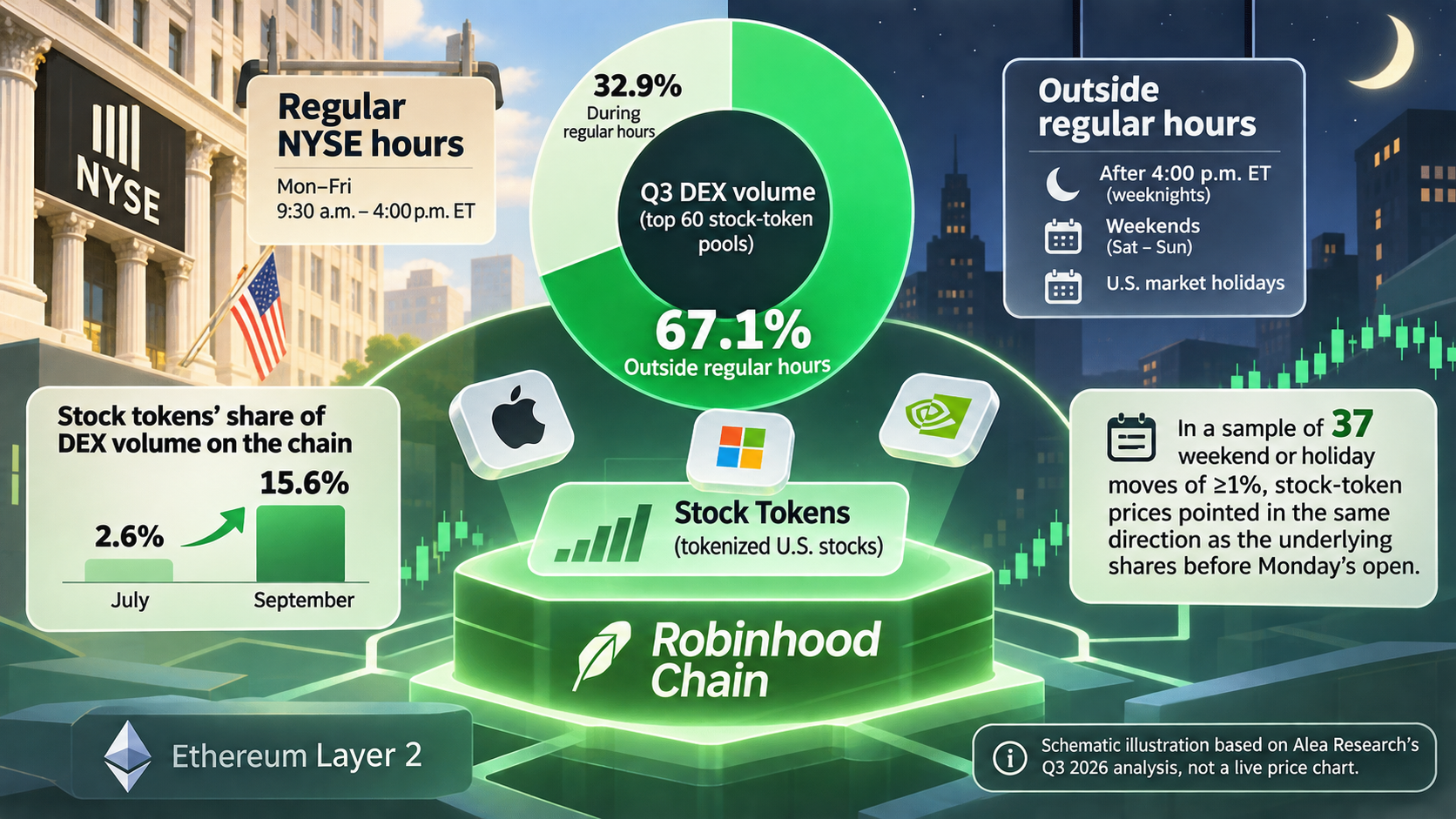
Alea Research also found that stock tokens’ share of the chain’s decentralized-exchange volume rose from 2.6% in July to 15.6% in September. Among the 60 highest-volume stock-token pools, 67.1% of Q3 volume occurred outside regular New York Stock Exchange hours.
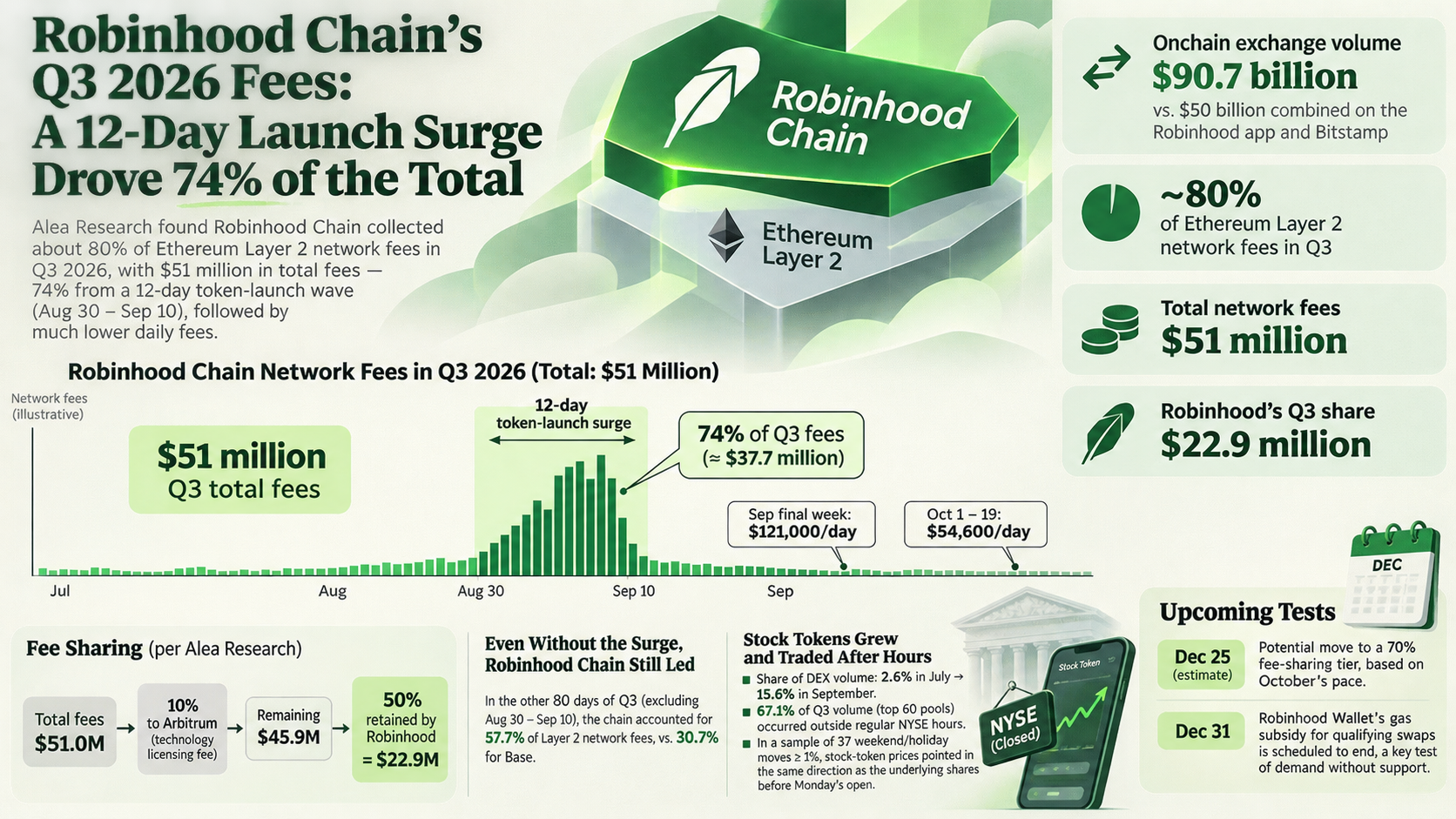
In the research’s sample of 37 weekend or holiday price moves of at least 1%, stock-token prices pointed in the same direction as the underlying shares before Monday’s open. That is a finding about a defined sample, not proof that the tokens will reliably predict future openings. The existing products also did not carry the dividend and voting rights discussed in a September 17 U.S. SEC order concerning compliant venues.
What remained to be tested
As of the November 11 report, two upcoming changes could help distinguish sustained demand from subsidized or unusually intense activity. Alea Research projected that Robinhood could reach a higher, 70% fee-sharing tier around December 25, based on October’s pace; that date was an estimate, not a completed change. Robinhood Wallet’s gas subsidy for qualifying swaps was scheduled to end on December 31, making later activity a clearer test of willingness to pay fees without that support.
The Q3 lead was substantial, including outside the launch surge. Whether fee demand would hold after the spike and subsidy remained an open question.