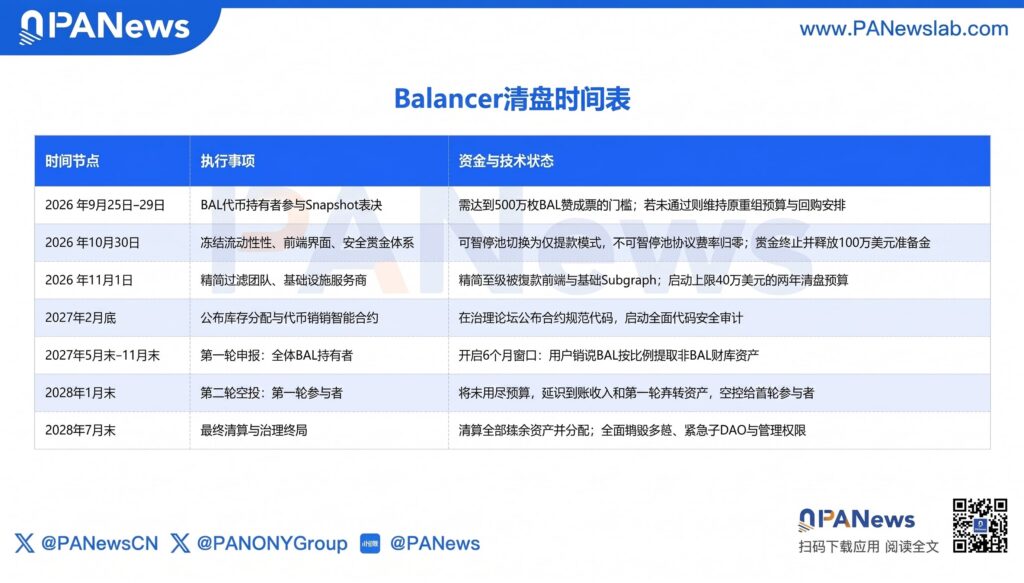
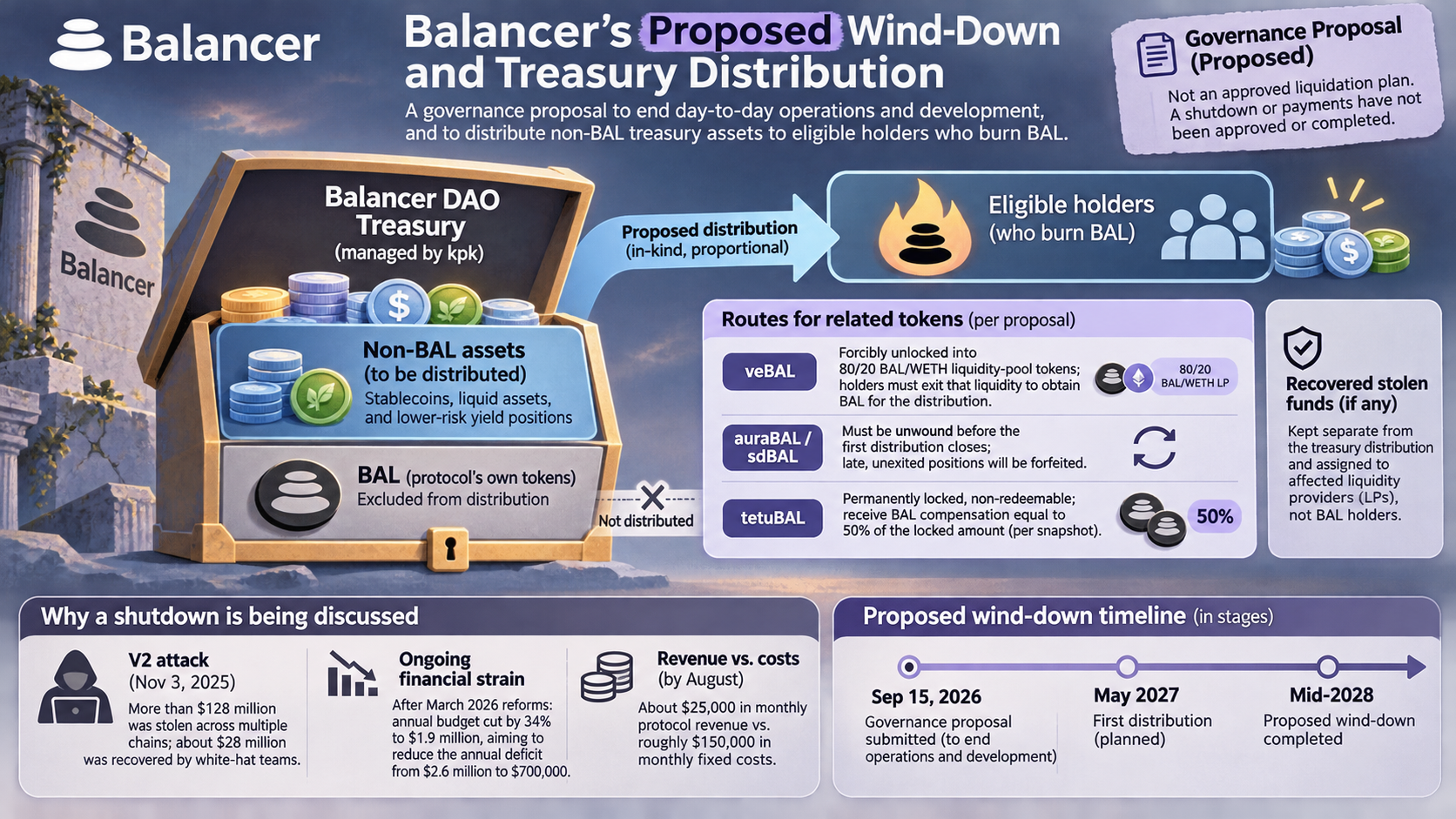
As reported on September 15, 2026, Balancer treasury council representative Marcus Hardt had submitted a governance proposal to end the DeFi protocol’s day-to-day operations and development. The proposal—not an approved liquidation plan—would distribute at least $9 million in non-BAL treasury assets to eligible holders who burn BAL. The report put BAL’s circulating market capitalization at roughly $8 million.
What the proposal would distribute
The treasury portfolio managed by kpk consists mainly of stablecoins, liquid assets and lower-risk yield-bearing positions, according to the proposal. Balancer’s own BAL holdings would be excluded. Eligible holders would instead receive a proportional, in-kind share of the external assets.
The proposal sets different routes for related tokens. veBAL locks would be forcibly unlocked into 80/20 BAL/WETH liquidity-pool tokens; holders would need to exit that liquidity to obtain BAL for the distribution. Holders of auraBAL and sdBAL would need to unwind their positions before the first distribution closes. For the permanently locked, non-redeemable tetuBAL, the proposal offers BAL compensation equal to 50% of the locked amount recorded in a snapshot.
Any funds recovered from earlier thefts would be kept separate from the treasury distribution and assigned to affected liquidity providers, not BAL holders.
Why a shutdown is being discussed
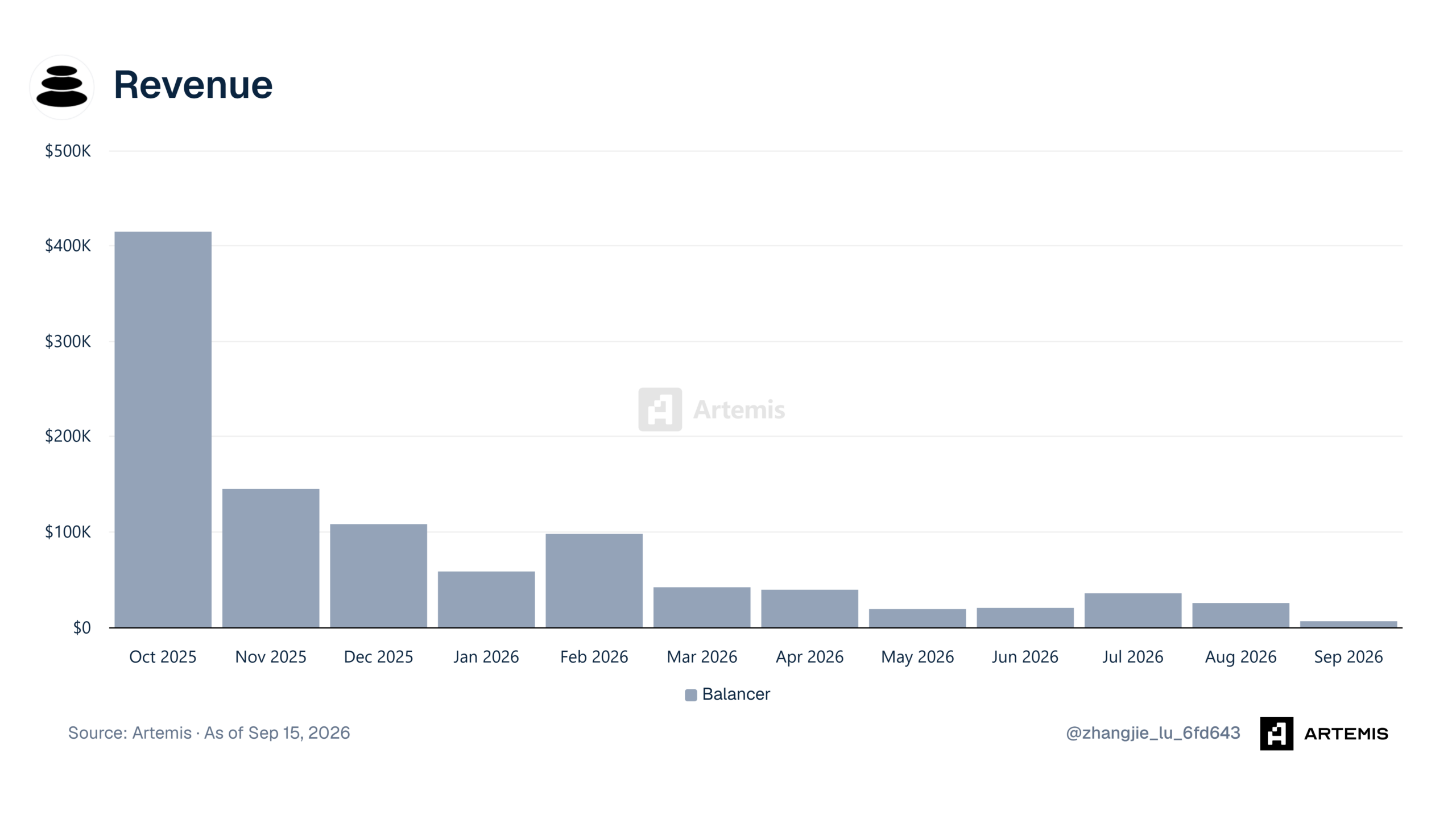
Balancer’s V2 composable stable pools were attacked on November 3, 2025. The report says more than $128 million was stolen across chains including Ethereum, Arbitrum, Base and Avalanche, and that white-hat teams recovered about $28 million. It links the subsequent loss of liquidity and trust to Balancer’s financial strain.
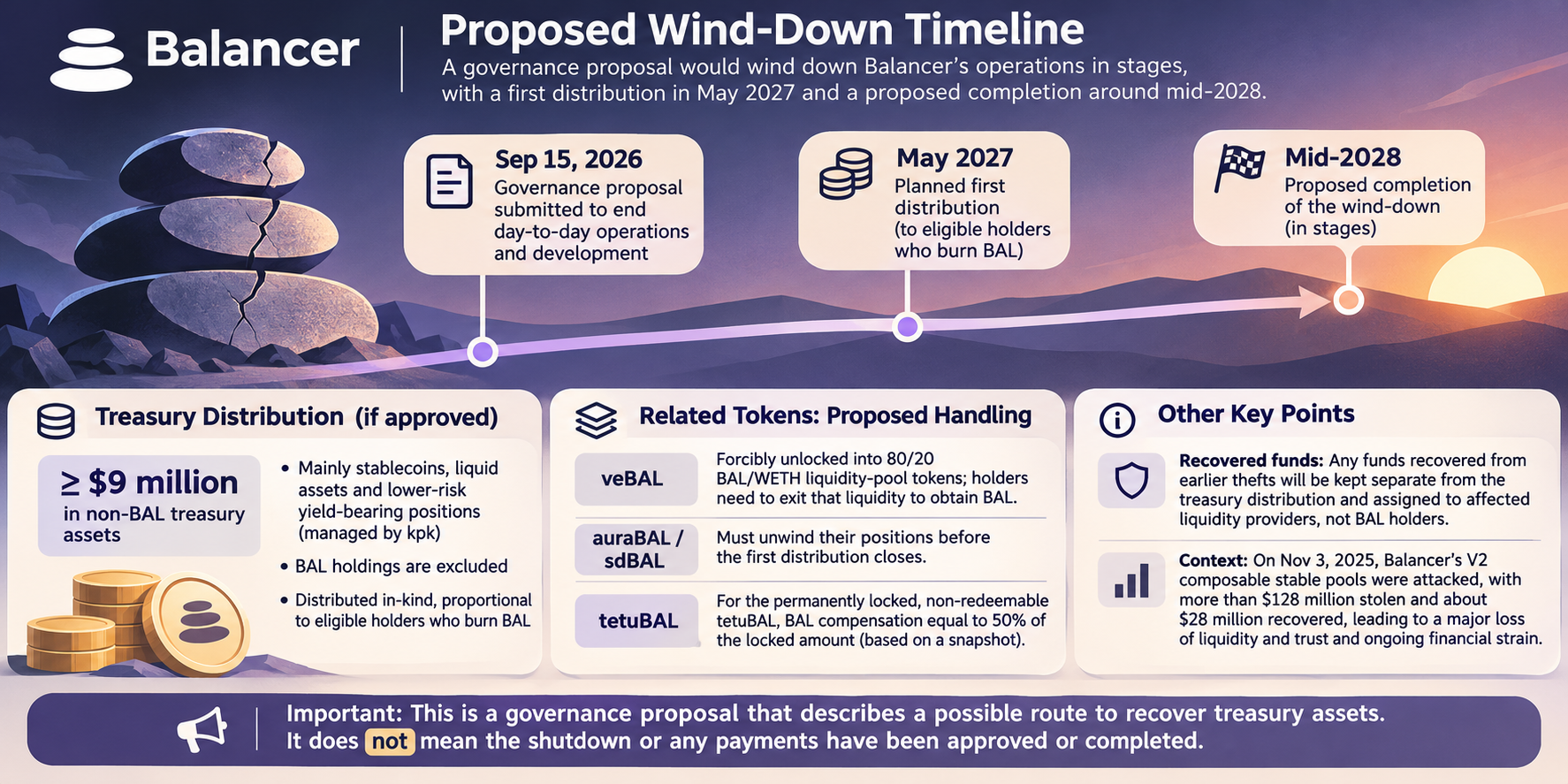
March 2026 reforms cut the annual operating budget by 34% to $1.9 million and aimed to reduce the annual deficit from $2.6 million to $700,000. By August, however, the report put monthly protocol revenue at about $25,000 against roughly $150,000 in monthly fixed costs. The proposed wind-down would run in stages until mid-2028, with a first distribution planned for May 2027.
The distinction for holders is immediate: a governance proposal describes a possible route to recover treasury assets, but it does not mean the shutdown or payments have been approved or completed.