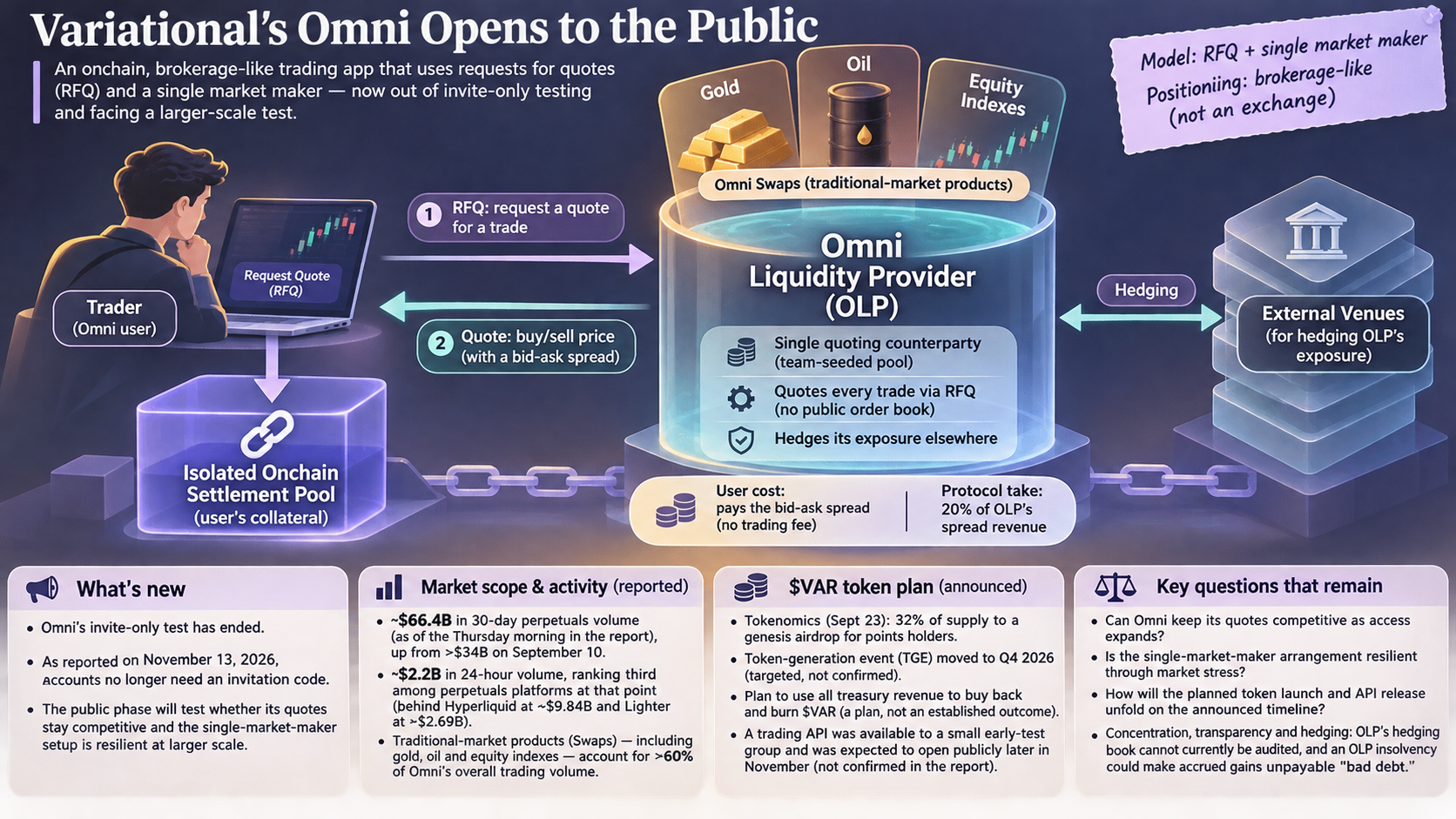
Variational has ended the invite-only test of Omni, its onchain trading app. As reported on November 13, 2026, accounts no longer needed an invitation code. The wider opening matters because Omni relies on one liquidity pool to quote every trade—a different model from an exchange where multiple traders compete on a public order book.
Why Omni is drawing attention
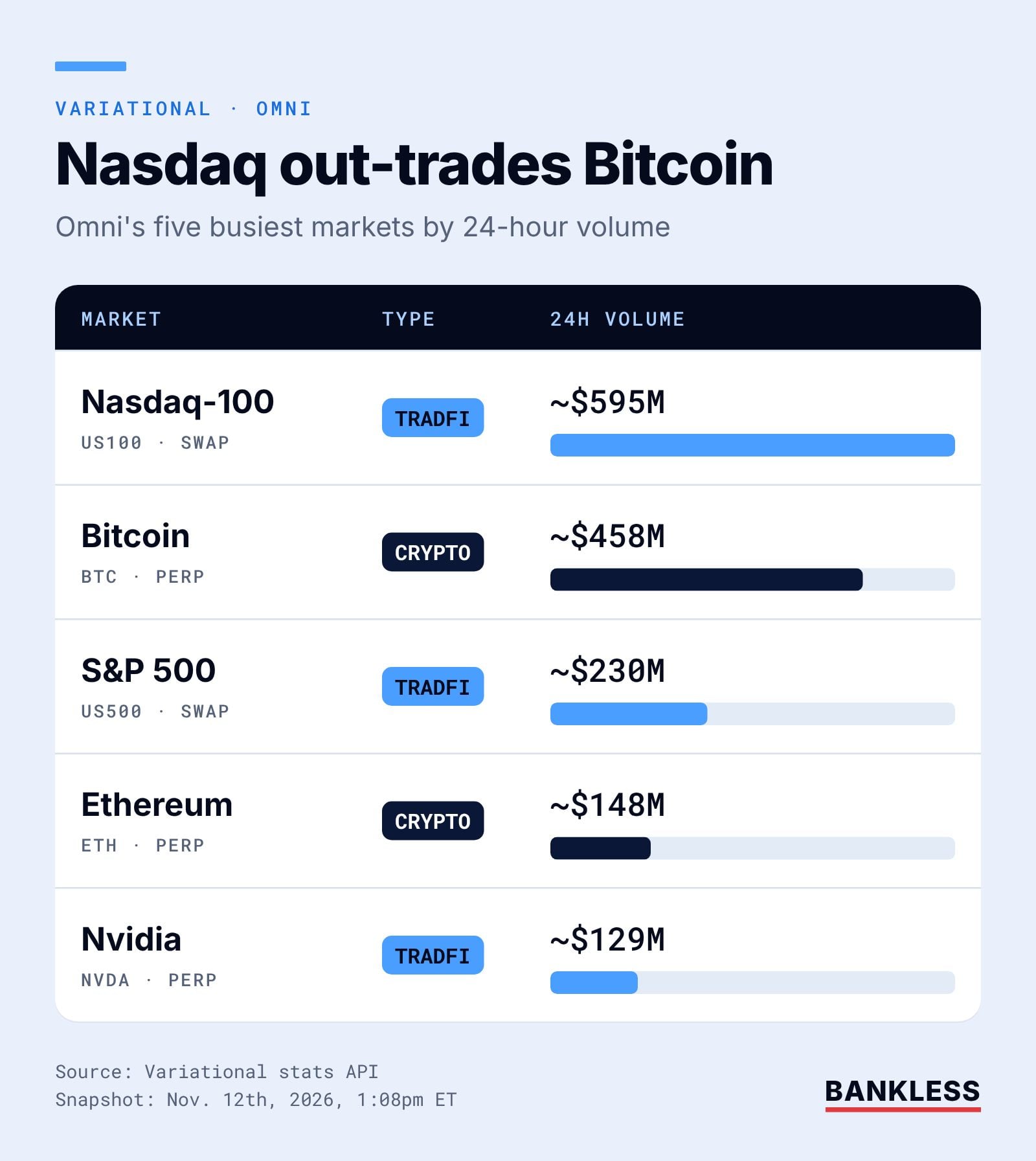
DefiLlama showed approximately $66.4 billion in 30-day perpetuals volume as of the Thursday morning covered in the report, up from more than $34 billion cited on September 10. Its roughly $2.2 billion in 24-hour volume ranked third among perpetuals platforms at that point, behind Hyperliquid at about $9.84 billion and Lighter at about $2.69 billion. Those are trading-volume figures, not measures of profitability or project quality.
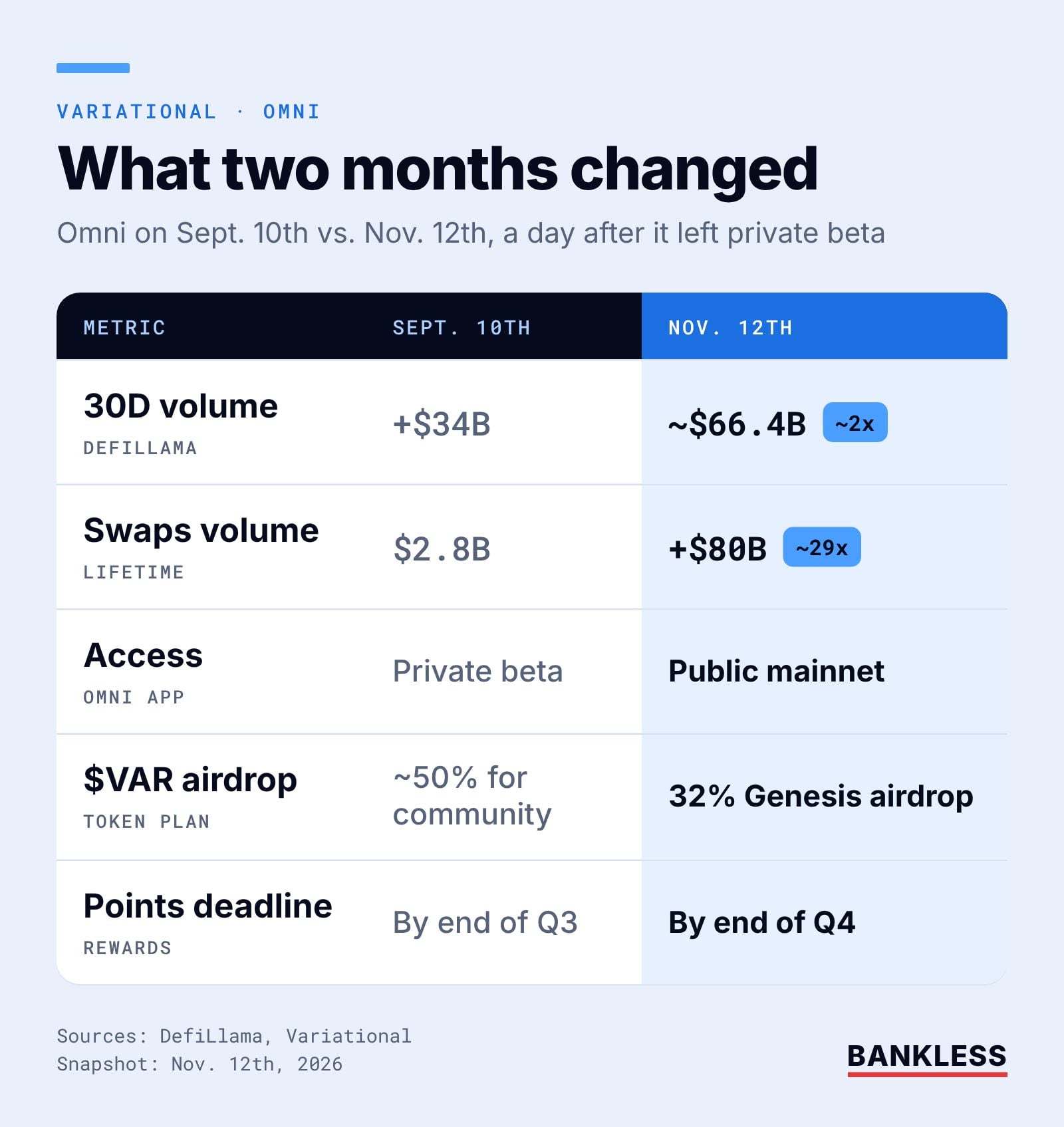
Traditional-market products are a major part of the story. Variational said on November 10 that cumulative volume in Omni’s Swaps markets, which include gold, oil and equity-index products, had exceeded $80 billion. The report said traditional-market products accounted for more than 60% of Omni’s overall trading volume. The cumulative Swaps figure should not be confused with Omni’s 30-day volume.
The model—and the objection
Omni uses requests for quotes rather than a public order book. Its team-seeded Omni Liquidity Provider pool, or OLP, quotes trades and hedges its exposure elsewhere. Users pay a bid-ask spread rather than a trading fee; the protocol currently takes 20% of OLP’s spread revenue. CEO Lucas Schuermann described Omni to Bankless in September as a brokerage-like model, not an exchange.
That concentration is also the central criticism. In an October 31 discussion on X, 0xLoris argued that a platform with one counterparty quoting every asset does not qualify as a true perpetuals DEX. X user Rencrypta pointed to the lack of competing quotes. Co-founder Edward Yu countered that collateral is posted transparently onchain and that Omni must still win traders in a market with many alternatives.
User collateral sits in individual, isolated onchain settlement pools rather than with the market maker. That does not remove every risk: Omni’s documentation says gains accrued after a potential OLP insolvency would become unpayable “bad debt,” and outsiders cannot currently audit OLP’s hedging book. On price, Alea Research estimated third-quarter spread costs at 2.35 basis points of volume, compared with a 2.40-basis-point average perpetuals fee on Hyperliquid. That estimate relied partly on team-disclosed data and is not a guarantee that quotes will remain competitive as access expands.
What remains unproven
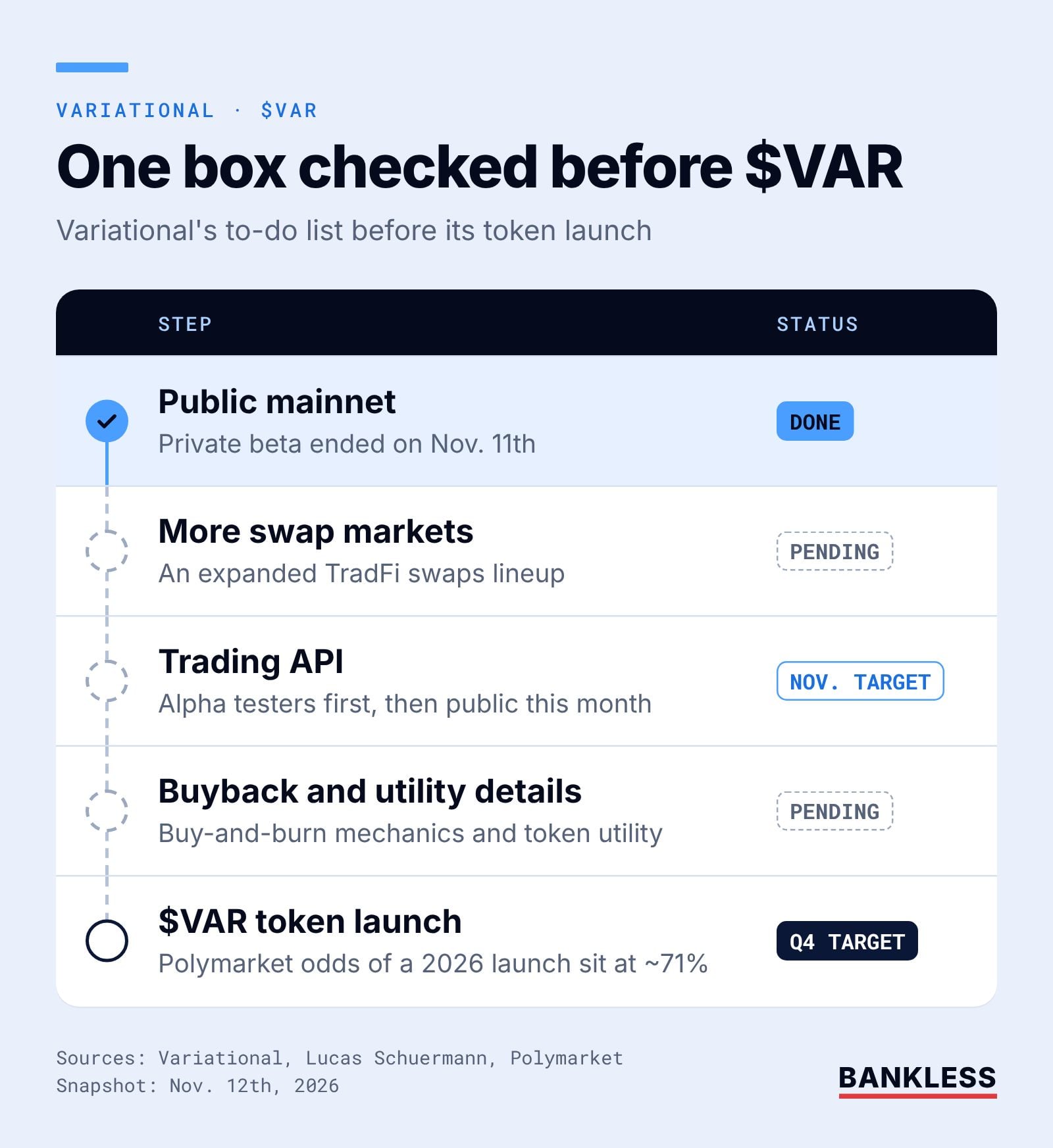
Variational’s September 23 tokenomics plan allocated 32% of the planned $VAR supply to a genesis airdrop for points holders, moved the token-generation event to the fourth quarter of 2026, and proposed using all treasury revenue to buy back and burn $VAR. Those buybacks were a plan, not an established outcome. On November 4, Schuermann said the team was still targeting a 2026 launch; he also said a trading API was available to a small early-test group and was expected to open publicly later in November. Neither the token launch nor the broader API release was confirmed in the original report.
The public phase can show whether Omni keeps its quotes competitive and its single-market-maker arrangement resilient at a larger scale. The reported volume explains the interest; it does not settle those questions.