As of the original report on November 6, 2026, two crypto-industry groups were pressing the US Securities and Exchange Commission to clarify how securities law applies to DeFi lending and vaults. They agreed on ordinary overcollateralized lending. Their disagreement was over vaults in which a manager can move users’ funds between lending markets.
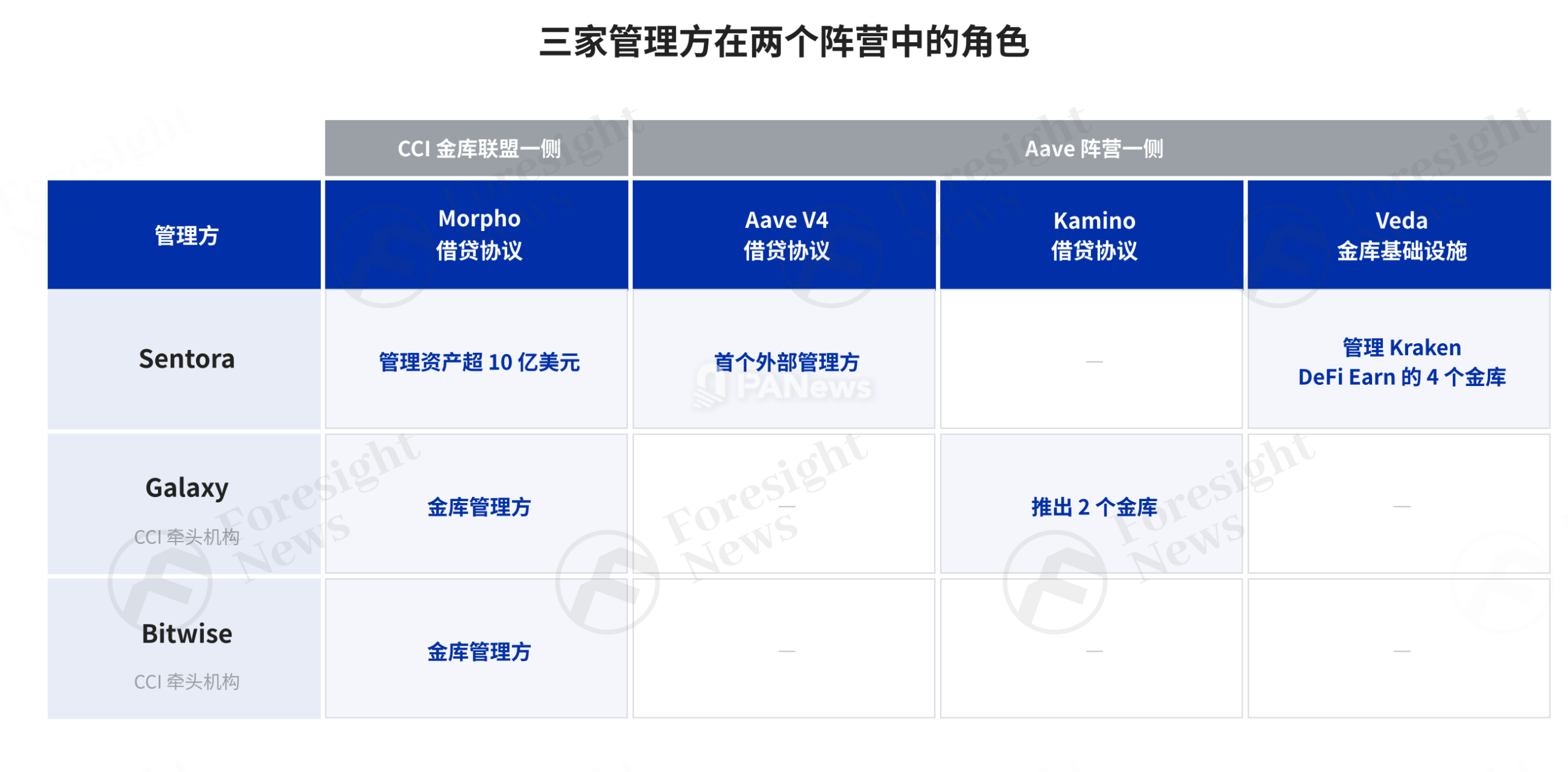
On November 2, Aave Labs, the Kamino Foundation and Veda Tech Labs publicly released a 16-page summary arguing that decentralized lending protocols and non-custodial vaults fall outside federal securities law. They had submitted a more detailed, confidential version to SEC staff on October 26 and requested a meeting. Separately, the Crypto Council for Innovation (CCI) published an approximately 238-page vault report in October, backed by a coalition led by Morpho, Bitwise and Galaxy.
Neither document was an SEC ruling. At the time of the November 6 report, the agency had not publicly responded to the Aave group’s request.
Where the proposals agree
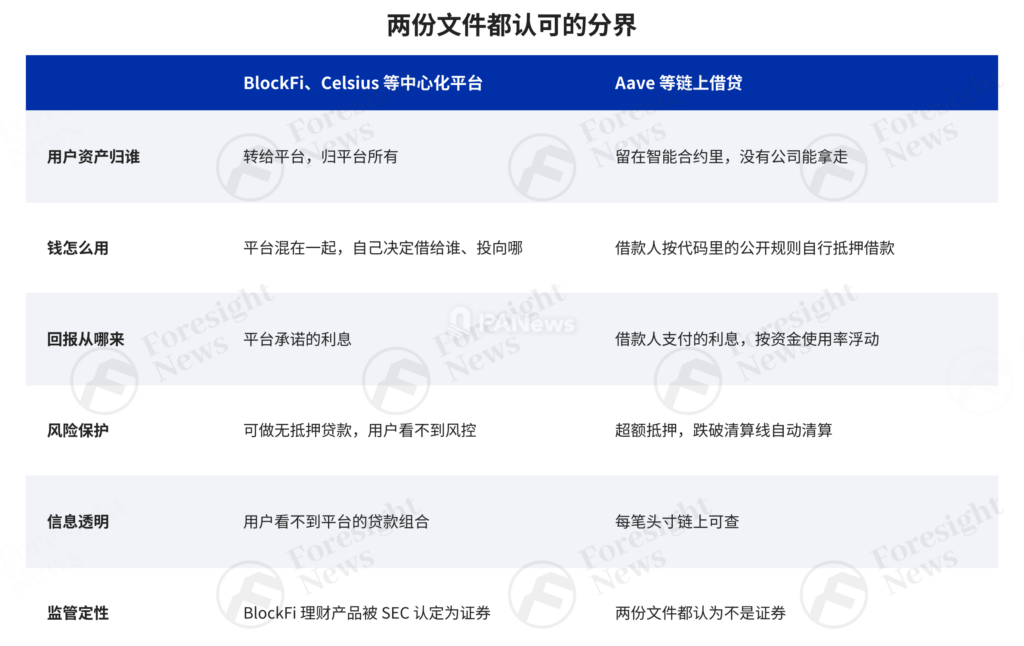
Both distinguish on-chain, overcollateralized lending from centralized lending arrangements such as BlockFi’s interest accounts. In 2022, BlockFi agreed to pay $100 million to settle charges with the SEC and states over those accounts. In an on-chain lending pool, by contrast, borrowers post collateral, liquidation can occur when its value falls too far, and interest rates follow public formulas. Both industry proposals argue that ordinary lending under that model is not a securities transaction.
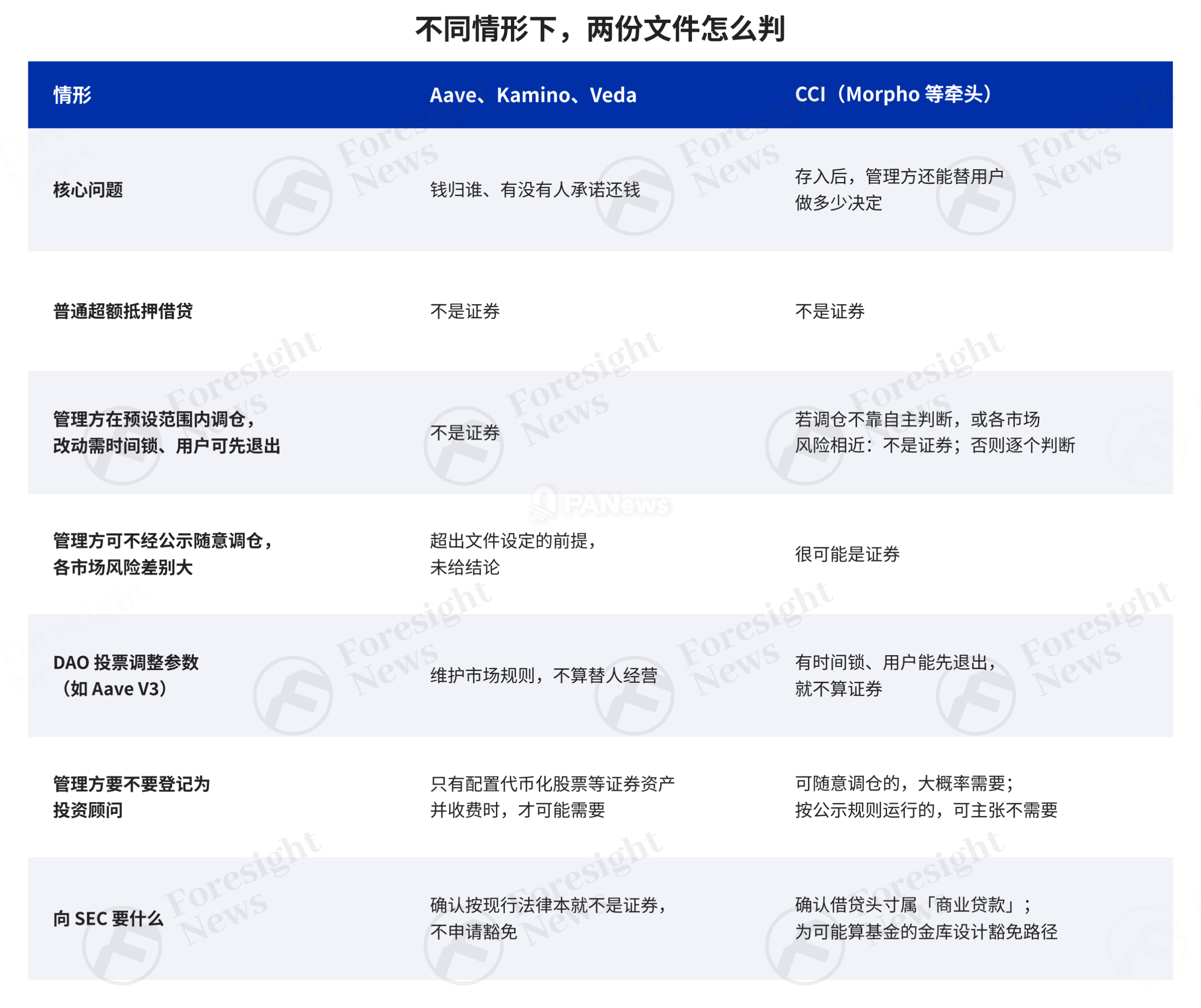
Their reasoning is not identical. The Aave group argues that a deposit does not create a note under the Reves test—and that it would not be a security even if treated as one. CCI seeks confirmation that the underlying lending positions are commercial loans, while assessing vault-share tokens separately under the Howey investment-contract test.
The disputed middle ground
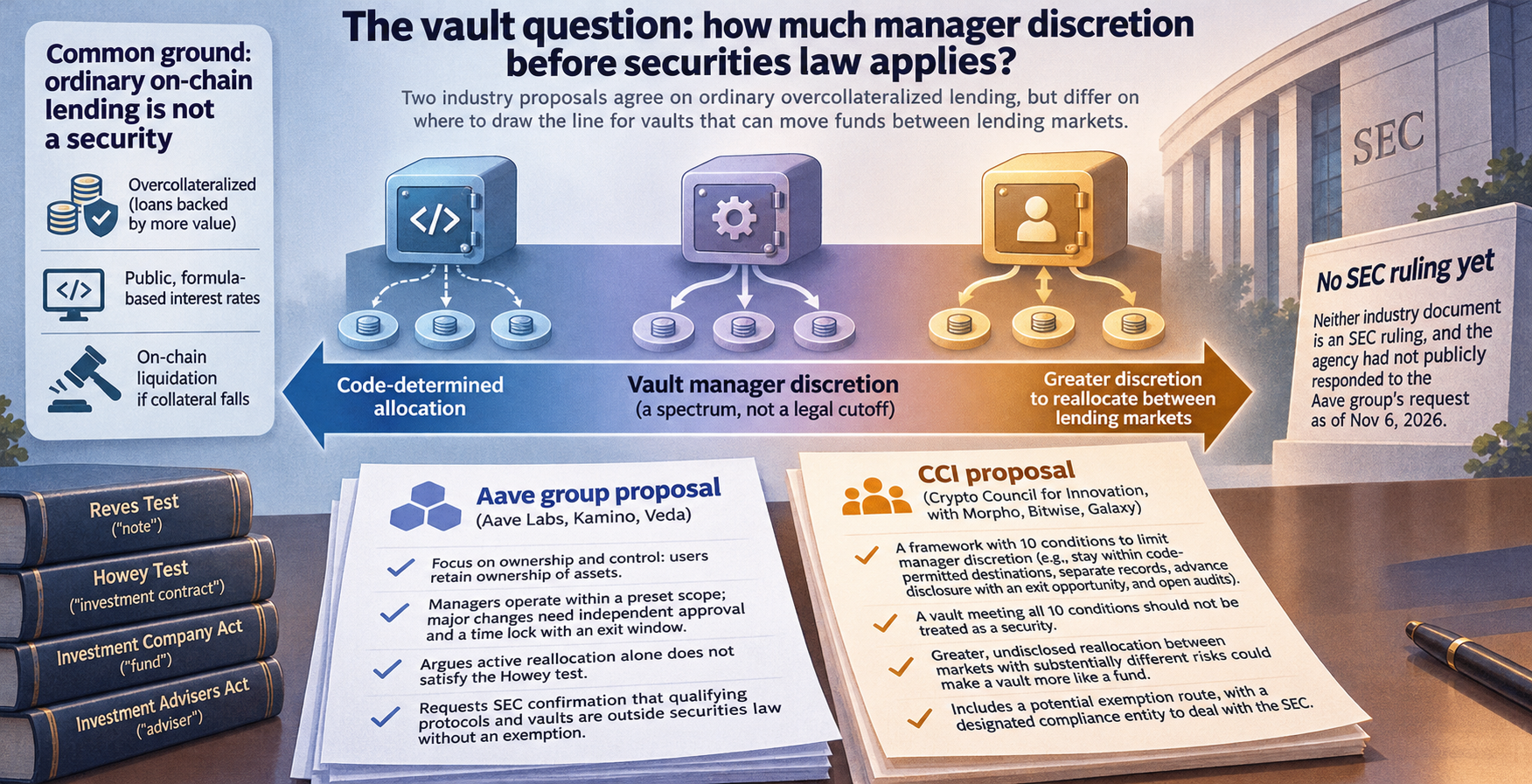
A vault may route deposits across several lending markets. The central question is how much discretion its manager can retain before users’ returns depend on that manager’s decisions.
CCI’s proposed framework sets out 10 conditions intended to limit that discretion. Among them: funds must stay within destinations permitted by code; users’ shares and assets must be separately recorded; consequential changes must be disclosed in advance with an opportunity to exit; and holdings, permissions and audits must be open to inspection. CCI argues that a vault meeting all 10 conditions should not be treated as a security.
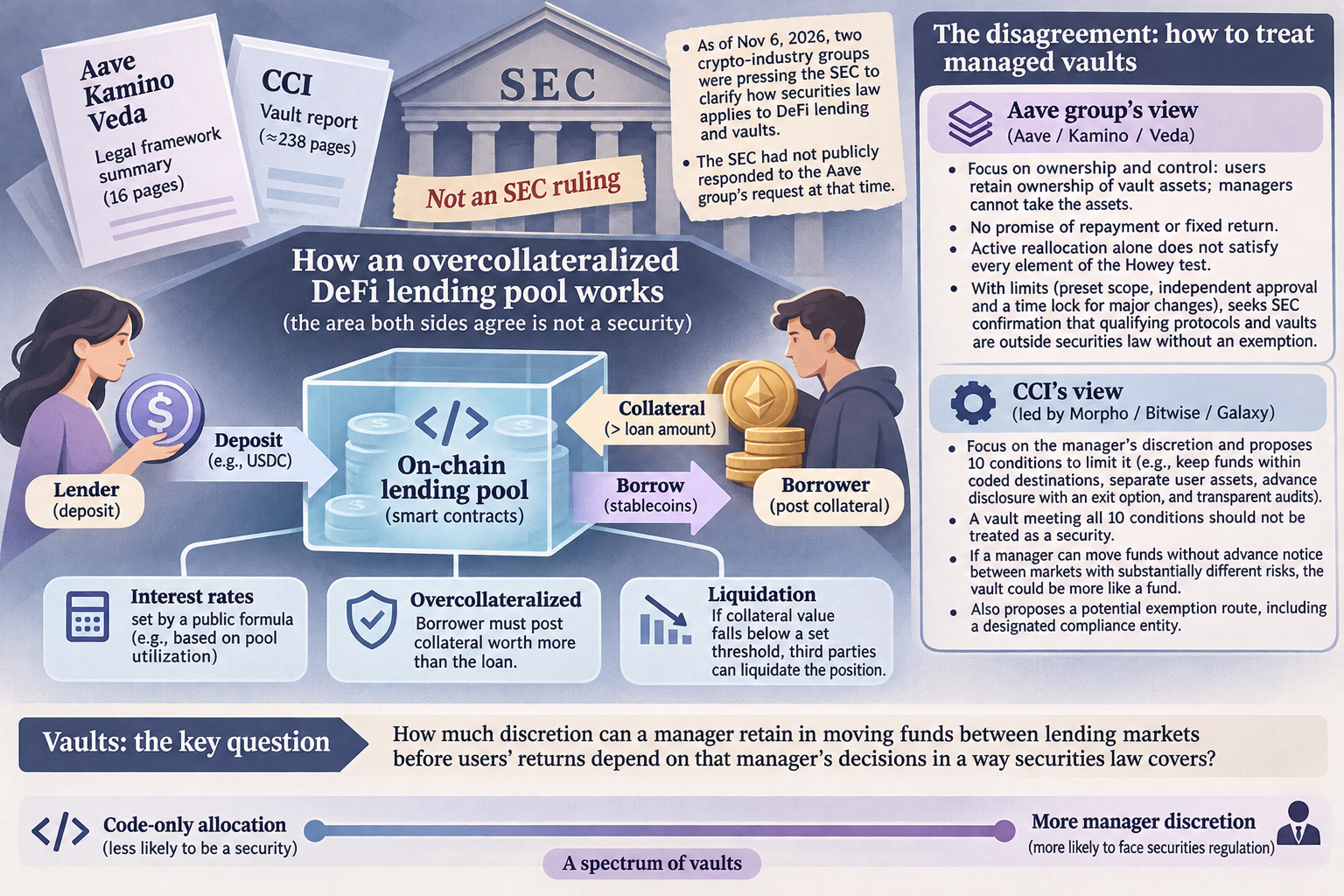
Under CCI’s analysis, a manager who can move funds without advance notice between markets with substantially different risks could make a vault more like a fund. CCI also proposes a potential exemption route for vaults that would otherwise face securities regulation, including a designated entity responsible for compliance and dealing with the SEC. These are proposed boundaries and remedies, not rules the SEC has adopted.
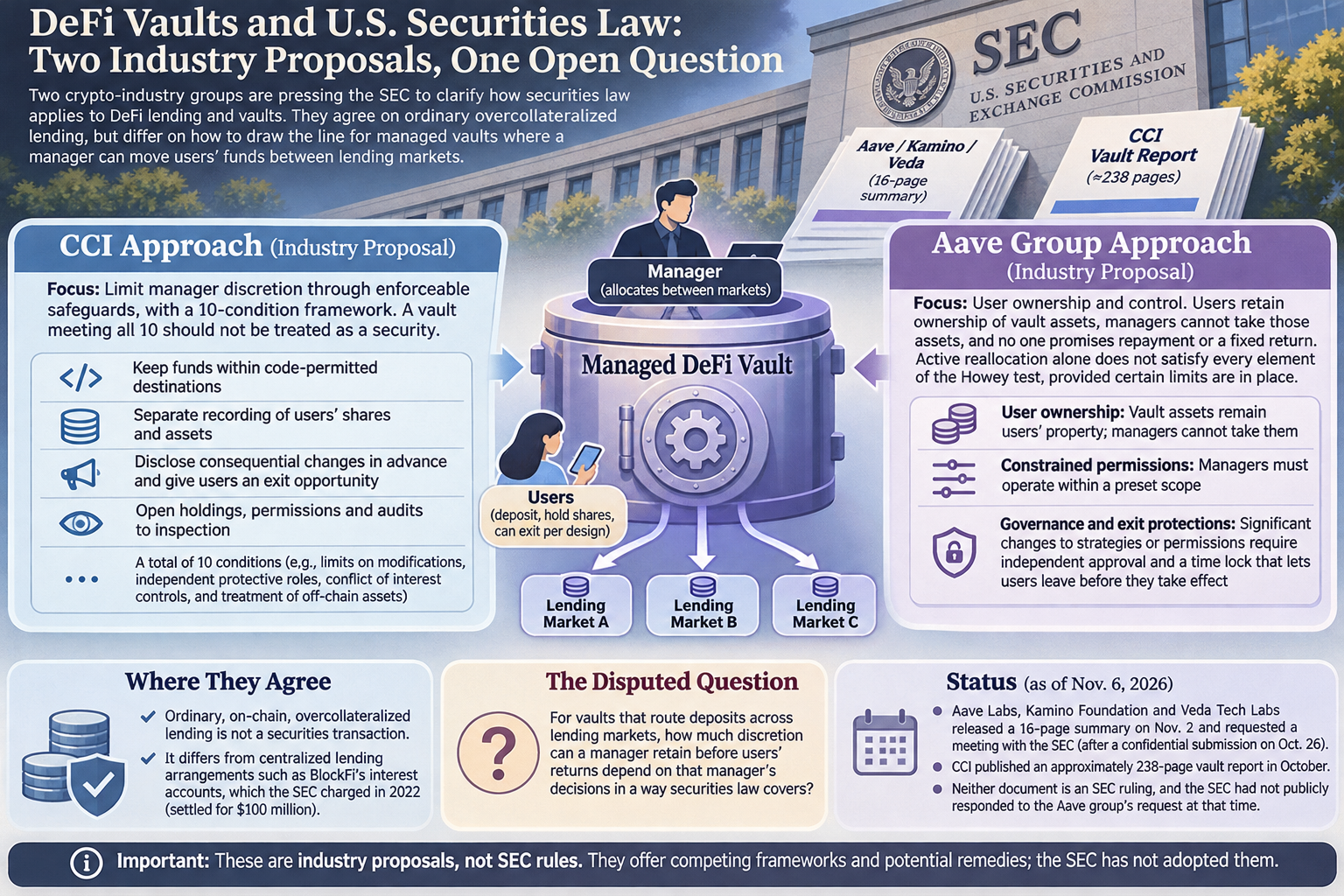
The Aave group puts more weight on ownership and control. It argues that users retain ownership of vault assets, managers cannot take those assets, and no one promises repayment or a fixed return. It acknowledges that active reallocation may involve a manager’s efforts, but argues that this alone does not satisfy every element of the Howey test. Its position depends on limits: managers must operate within a preset scope, and significant changes to strategies or permissions require independent approval and a time lock that lets users leave before they take effect. The group asks the SEC to confirm that qualifying protocols and vaults are outside securities law without an exemption.
Why the distinction matters
The proposals reflect different operating models. Aave’s V3 deposits largely sit in public pools governed by DAO-set parameters; its group argues that changing those parameters should not itself turn governance into investment management. Morpho relies more directly on managers to select lending markets and set exposures for vaults. Kamino and Veda also work with managed vaults, showing that the two camps are not a simple split between managed and unmanaged products.
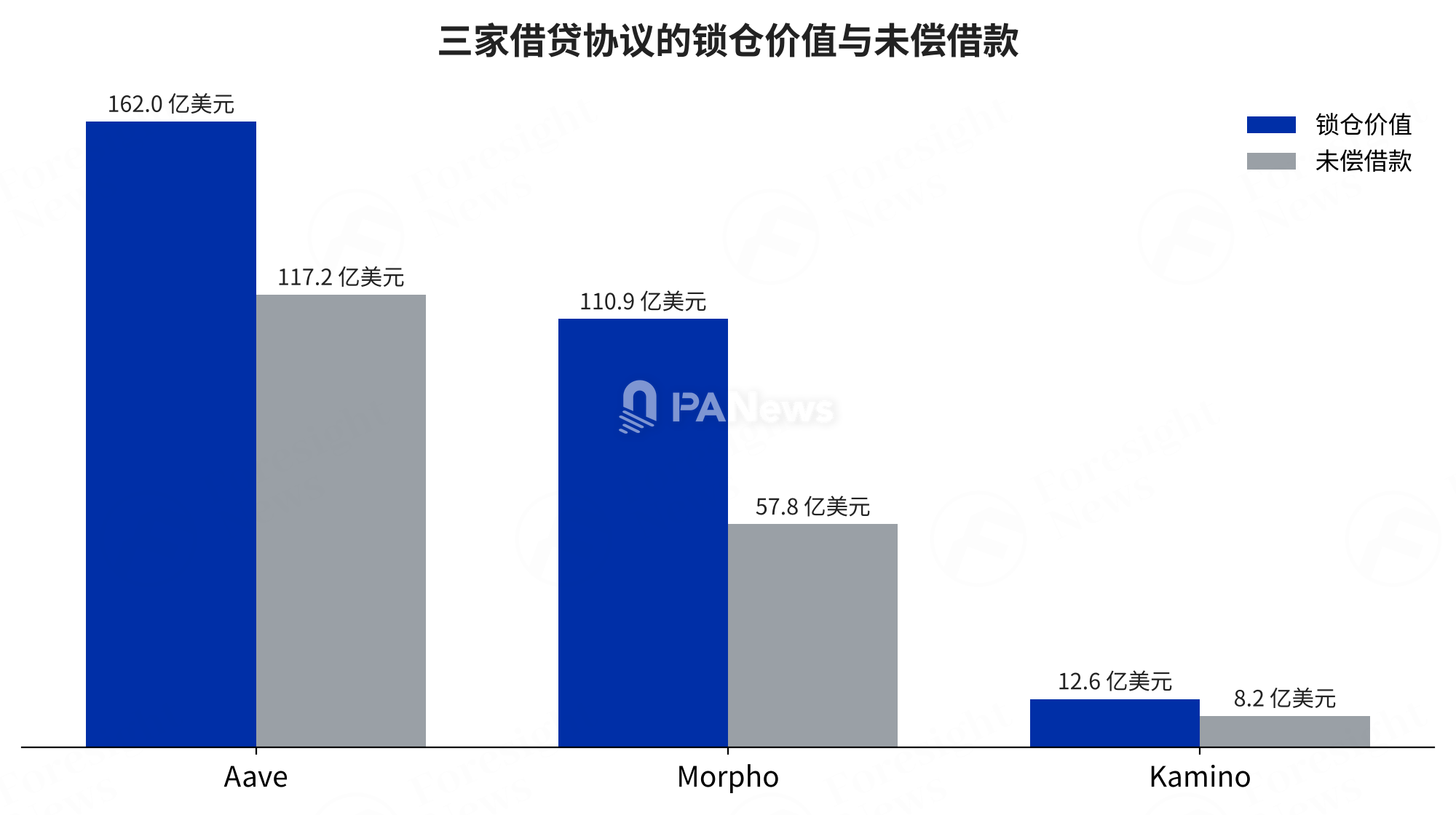
The scale is significant, though these figures do not settle the legal question. At the time of the original report, DefiLlama showed approximately $16.20 billion in Aave total value locked, $11.09 billion in Morpho and $1.26 billion in Kamino. Their respective outstanding loans were about $11.72 billion, $5.78 billion and $820 million.
The unresolved issue is not whether a vault uses code. It is whether the discretion left to people operating or governing it makes users dependent on their decisions in a way securities law covers. The two documents offer competing answers; the November 6 report did not establish which, if either, the SEC would accept.