Originally reported November 13, 2026, at 14:00 UTC+8.
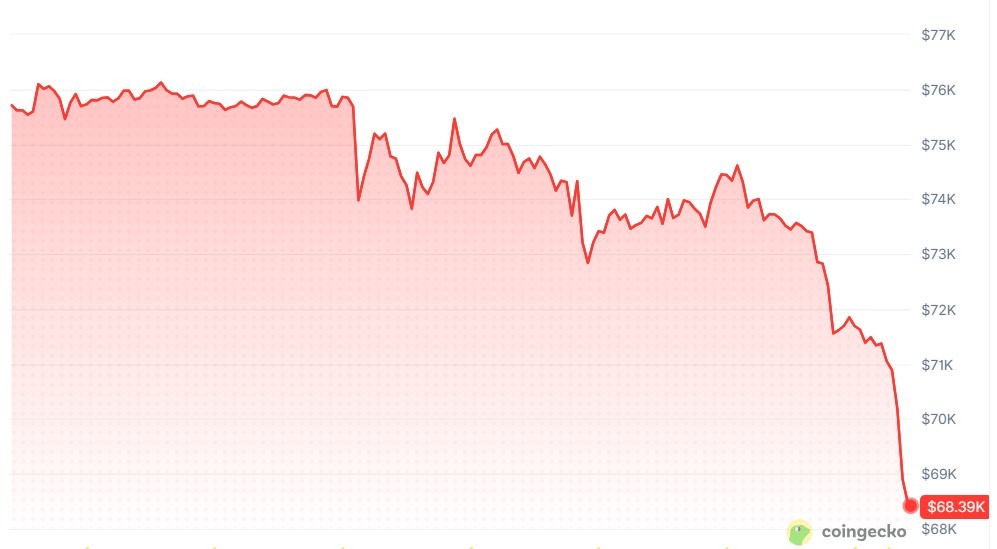
Bitcoin fell below $70,000 on Friday, November 13. At the time of the original report, it traded at $68,607.23, down 9.2% over seven days, according to CoinGecko. The Crypto Fear & Greed Index stood at 20—its lowest reading since July 8 and a level classified as “extreme fear.”
What was behind the concern?
Vikram Subburaj, CEO of crypto exchange Giottus, attributed the weakness to institutional outflows, tighter crypto liquidity and expectations of a December Federal Reserve rate hike. That rate move was an expectation, not an announced decision.
In a Friday report, 10x Research noted that Bitcoin fell 5.9% from November 5 to November 12 while the Nasdaq 100 rose 6.4%. The firm suggested Bitcoin was responding more to rising Treasury yields and a stronger US dollar than to tech stocks. It also compared Bitcoin’s trading with gold, which fell 5.5% over that period, as the US 10-year Treasury yield rose above 5%.
Liquidity offered another reason for caution. Talos reported that Bitcoin order-book depth across major exchanges fell to $72 million on November 9, roughly 33% below normal levels. Talos researcher Tanay Ved warned that thin liquidity and elevated leverage could magnify moves in either direction.
US spot Bitcoin ETFs had also seen withdrawals. BlackRock’s iShares Bitcoin Trust recorded more than $2 billion in net outflows over nine consecutive trading sessions through Wednesday, November 11; broader funds shed nearly $1.44 billion over five sessions. Preliminary Farside Investors data showed a further $47.7 million in net outflows on Thursday, but BlackRock and Fidelity figures were still pending. Those incomplete figures did not establish a final Thursday total.
Source: cointelegraph.com (originally published 2026-11-13 14:00 UTC+8)