When SpaceX listed on Nasdaq in June 2026, 27,689 wallet addresses committed $557 million in USDC to an offering run by Binance Wallet and tokenization platform xStocks. But the third-party supplier could not secure enough SpaceX shares to back the SPCXx tokens. Binance canceled the offering, returned the USDC and distributed $1 million worth of SPCXB, a separate token issued by its Abu Dhabi entity, according to Principia Research.
The subscriptions showed demand for that particular offering. The refund showed what the blockchain could not deliver: an allocation of shares. In a November 27 analysis, Principia argued that Binance’s licenses, securities filings and hiring in Abu Dhabi point toward a different model, in which companies could issue shares directly onchain. The evidence is stronger for trading tokens backed by existing shares than it is for underwriting new ones.
What Binance can already trade
On June 11, 2026, BTech Holdings’ first bStocks gained admission to the Abu Dhabi Global Market (ADGM) Official List and began trading on Binance’s Nest Exchange. According to Principia, these were the first tokenized securities on a public blockchain to enter that list. The tokens run on BNB Smart Chain; the underlying US shares remain in the US Depository Trust & Clearing Corporation system.
That distinction matters for buyers. Under paragraph 92 of Schedule 1 to ADGM’s Financial Services and Markets Regulations, bStocks are certificates representing specified financial instruments. The prospectus makes one-for-one segregated custody, reconciliation and proof of reserves enforceable obligations. Regulatory approval is not a guarantee that the assets are present. A multiplier built into the token contract accounts for stock splits and reinvested net cash dividends without requiring holders to exchange their tokens.
The Bending Spoons listing illustrates how the model works. The Italian technology group went public on Nasdaq on July 1 at $29 a share. BTech subsequently secured approval for its BSPB token, which Binance also accepted as margin collateral. The token followed the IPO; it did not fund it. Later approvals covered assets ranging from GameStop shares to leveraged exchange-traded funds.
Principia put cumulative bStocks turnover above $30 billion by early September, with more than half traded while US stock markets were closed. That measures trading activity, not capital raised for the companies whose shares back the tokens.
Why the Abu Dhabi licenses and job postings matter
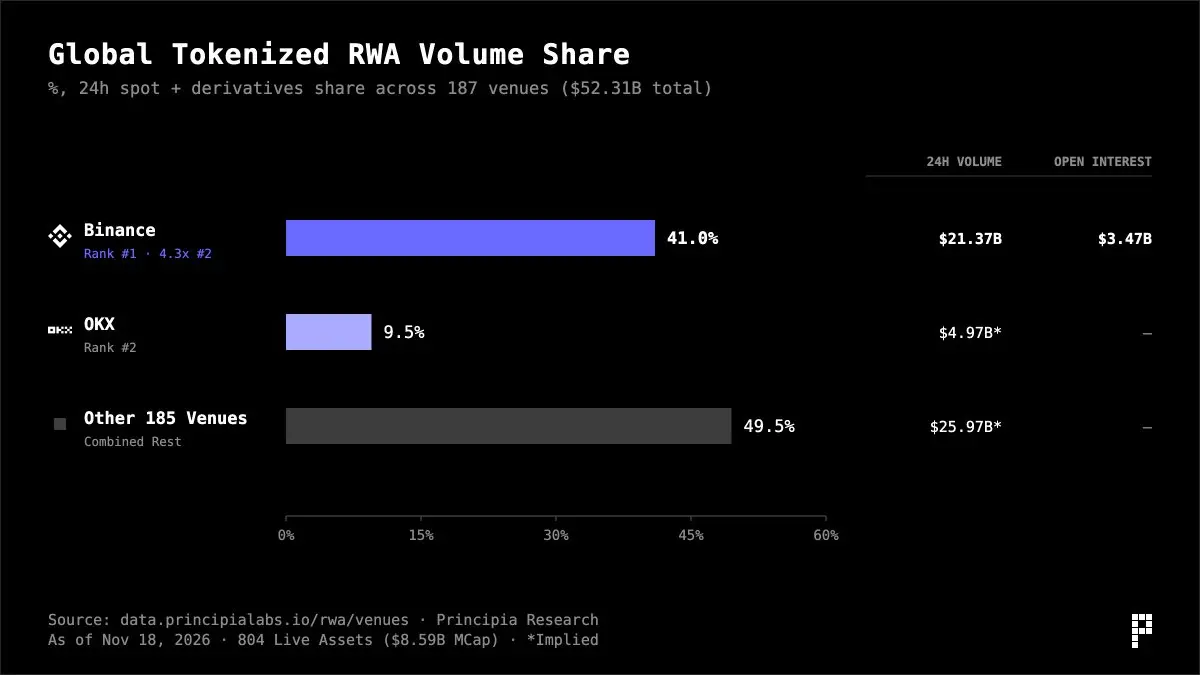
Binance’s Abu Dhabi ties predate the SpaceX refund. In March 2025, Abu Dhabi investment firm MGX used stablecoins to buy a $2 billion minority stake, becoming Binance’s first external institutional shareholder. Binance co-CEO Richard Teng had previously led ADGM’s Financial Services Regulatory Authority (FSRA) from 2015 to 2021. Approval to bring Binance.com’s global operations under ADGM supervision came in December 2025 and took effect on January 5, 2026.
Under Irish parent Binance Holdings (IE) Limited, the group separates functions that an issuer would need to bring securities to market:
- Nest Exchange Limited operates a recognized investment exchange and a multilateral trading facility.
- Nest Clearing and Custody Limited is licensed as a recognized clearing house and central securities depository.
- Nest Trading Limited can deal as principal or agent and arrange investment transactions. It cannot hold or control conventional client money, and its money-services permissions are limited to recognized fiat-referenced tokens such as USDC.
- BTech Holdings Limited files prospectuses and seeks admission to the Official List. BTech Services Limited handles minting and disclosure support.
Principia sees the clearest sign of interest in new issuance in Binance’s UAE equity capital markets job postings. The business development and research roles call for staff to approach prospective issuers and investment banks, conduct due diligence, model pricing and submit deals to an internal investment committee. Those duties go beyond buying listed shares to back tokens. They do not, however, identify a company that has agreed to go public through Nest.
The case for smaller issuers
Principia argues that the more plausible customers are midsize companies, not the next SpaceX. It cites ADGM’s $20,000 prospectus review fee and $3,000 Official List admission fee. The $23,000 total covers regulatory fees, not legal, audit or advisory work. Under the profit test cited in the analysis, an issuer needs $1 million in aggregate profits from continuing operations over three years and $500,000 in consolidated profit over the latest 12 months. A separate asset and market-value test is available to companies that do not meet the profit test.
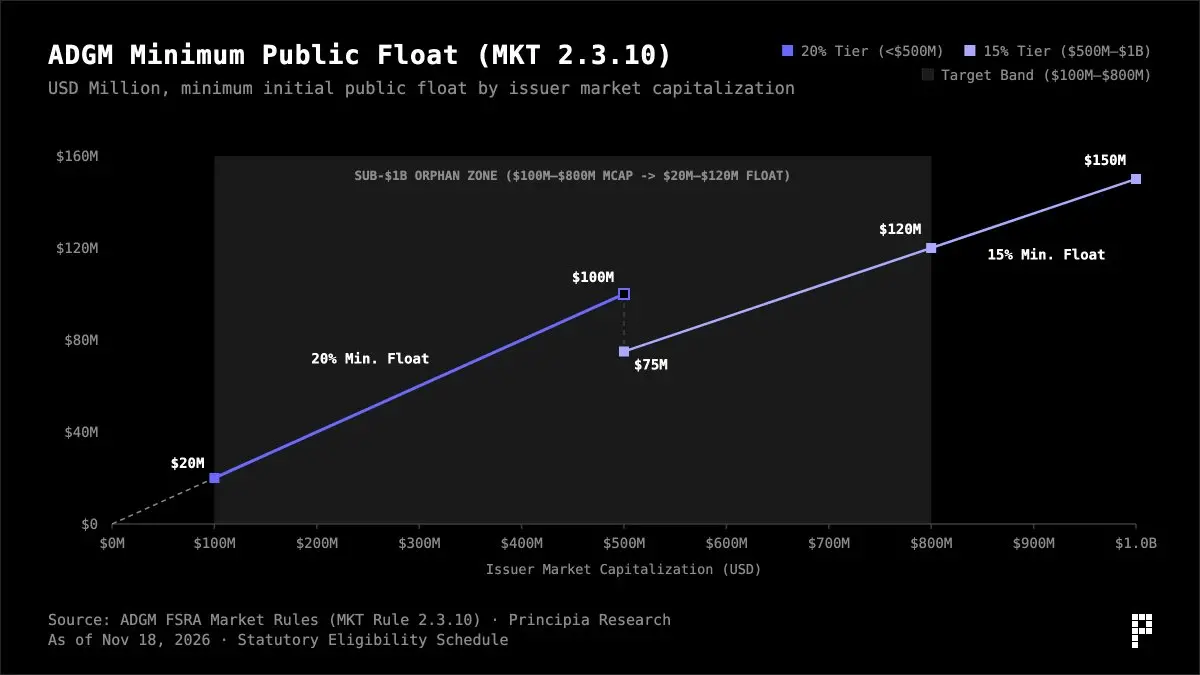
The rules also address how much stock reaches the public. Principia cites minimum public floats of 20% for issuers valued below $500 million and 15% for those valued from $500 million to $1 billion. Directors’ and related parties’ holdings, employee share trusts and certain shares lent to market makers do not count the same way as stock held by independent public investors.
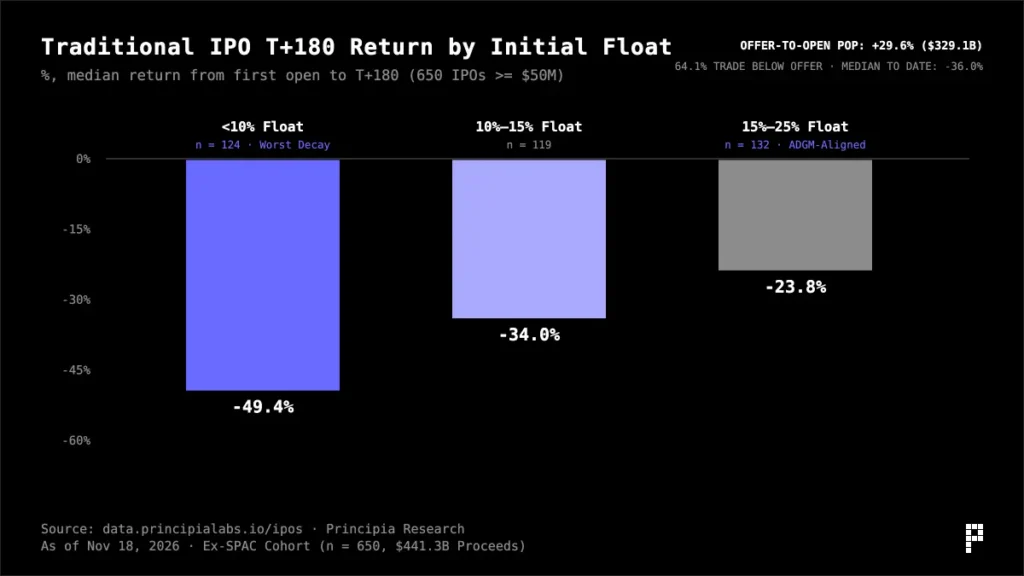
Principia’s comparison of 650 conventional IPOs illustrates why the distinction between an allocation and an aftermarket purchase matters. The sample excluded SPACs and covered offerings that raised at least $50 million each. The opening price averaged 29.6% above the offer price, but the median return from that opening price to the study’s observation date was −36.0%. Those are historical results from the sample, not evidence that an onchain IPO would deliver better returns.
Nor has Binance announced an IPO of its own. Teng said in 2025 and 2026 that Binance had ample cash flow and no near-term plan to go public to raise capital. Principia floated a separate listing of a regulated Abu Dhabi business as a possibility, not a company decision. As of its November 27 report, the documented milestones were licenses, trading in listed certificates and recruitment—not a completed native onchain IPO.