
Originally reported by Deep Tide TechFlow on November 11, 2026, at 10:31 a.m. (UTC+8). This is a design proposal, not a report of a working system.
Independent researcher hitesh.eth argues that crypto’s ability to create liquid markets has outpaced its ability to support trustworthy cooperation. His proposed “Human Commitment Markets” would start with a service people need, then agree on payment, evidence of completion, dispute rules and consequences for nonperformance before work begins. Tokens, if used, would represent those defined obligations—not substitute for them.
What would a commitment look like?
The article sketches a repair job in which a customer places 100 units in escrow and a technician posts a 20-unit performance deposit. Both agree in advance on the deadline, quality requirements, evidence and dispute process. If the job is accepted, the technician receives the payment and gets the deposit back. If the technician never starts and misses the deadline, the customer receives a refund and the agreed compensation. A contested repair would go to an independent evaluator; the contract would execute the resulting allocation of escrowed funds.
Those figures are illustrative. The evaluator—not the smart contract—would judge what happened to the physical equipment. The proposal also leaves real implementation questions, including what happens if an evaluator disappears, how appeals end and how funds avoid becoming stuck.
Where the proposal draws the line
The article draws on the privacy arguments of Timothy C. May, Eric Hughes and David Chaum, Wei Dai’s work on pseudonymous contracts, and Elinor Ostrom’s research on communities with multiple centers of governance. Hitesh.eth applies those ideas to an Ethereum-based design; the historical thinkers did not propose this integrated system.
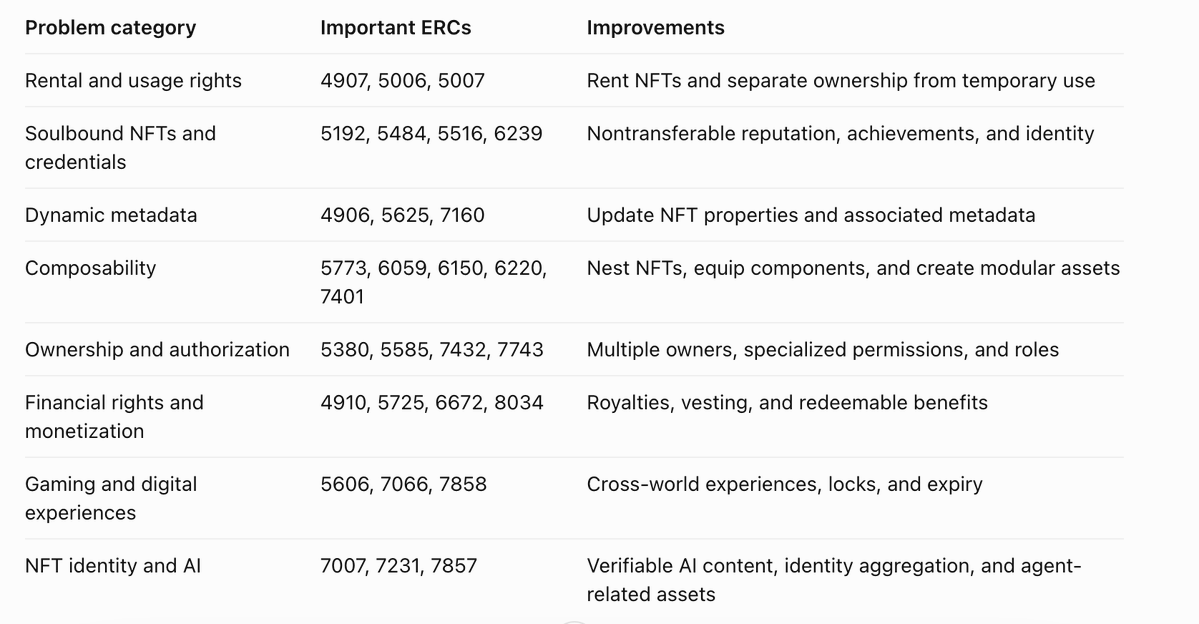
In that design, service credits, qualifications and reputation serve different purposes. The author discusses ERC-1155 and ERC-6909 as possible interfaces for service credits, ERC-5484 for nontransferable credentials, and ERC-5564 for stealth addresses. None proves a provider can deliver a service. Nor does a nontransferable credential establish honesty or unique identity, or a stealth address hide every payment detail. The article says the relevant standards were marked Final on their official pages when checked on November 10, 2026; that status does not establish the security of an application built with them. ERC-8004, discussed as a possible framework for AI-agent identity and feedback, was Draft at the time of that check.
The proposed safeguards include limited early transaction sizes, confidential credentials, rules for disputed reputation, constraints on administrators’ powers and a way for members to leave without forfeiting unrelated assets. Hitesh.eth suggests testing a narrow escrow workflow on Sepolia, then assessing contract safety and privacy before a small real-money pilot.
What remains unproven: The source does not report a deployed Human Commitment Markets system or results from a pilot. Its proposed measures of success are completed jobs, repeat customers, dispute times, losses, privacy failures and earnings after subsidies—not token price. That distinction is the point of the proposal: a market can attract attention without demonstrating that its participants can reliably make and keep useful commitments.
Source: techflowpost.com (originally published 2026-11-11 10:31 UTC+8)